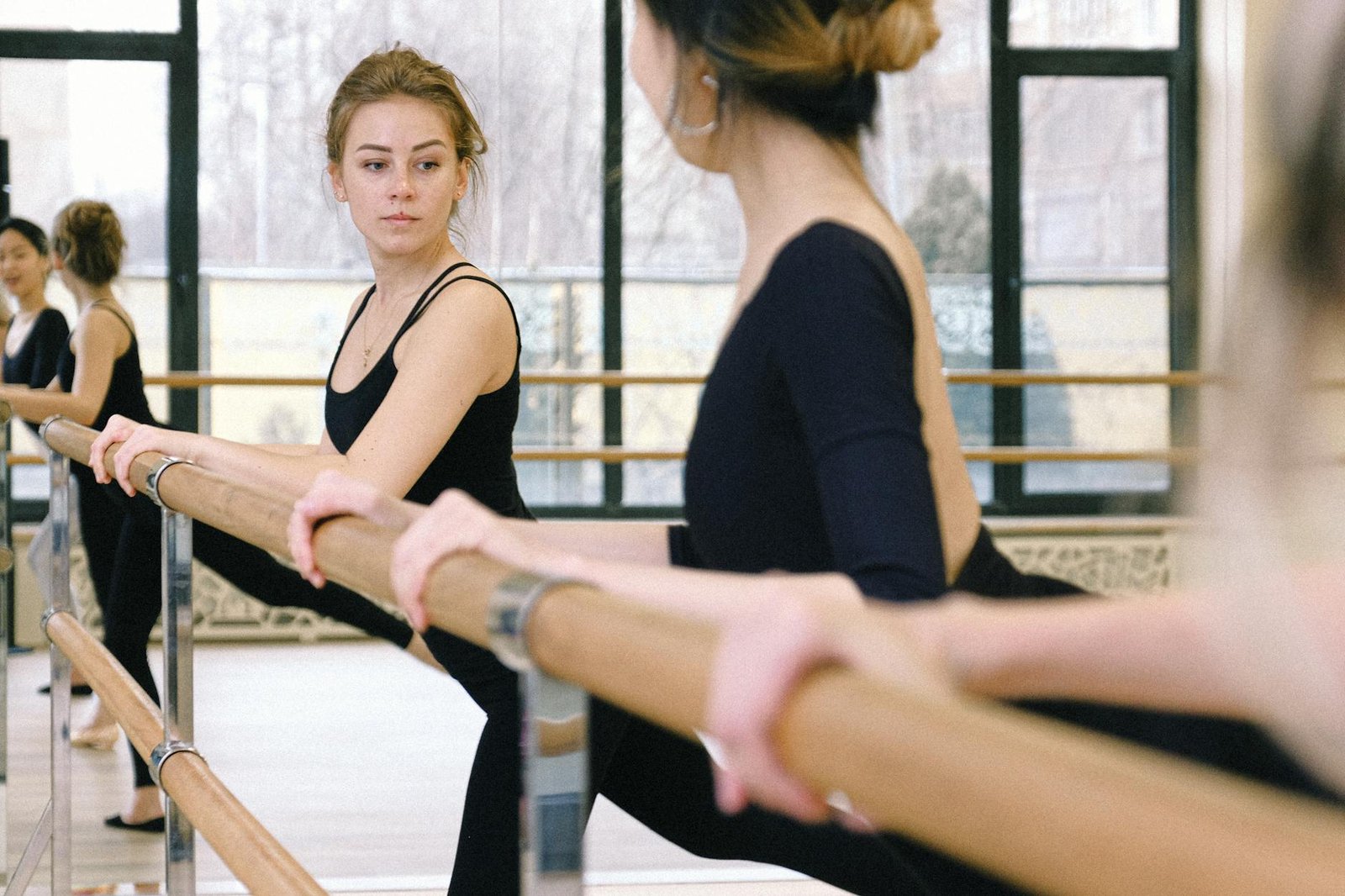
Adult-beginner ballet classes are full of people who spent years telling themselves “someday.” The reality is that adult ballet classes exist specifically for people starting from zero, and they’re nothing like the serious children’s classes you might be imagining.
Finding the Right Class
Not all ballet classes are appropriate for adult beginners. Search specifically for:
- “Adult beginner ballet” or “Ballet for beginners — adults”
- “Adult recreational ballet” or “Ballet fundamentals”
- Specifically avoid classes listed only as “Adult ballet” without a level designation — these may include intermediate or advanced students
Community centers and adult recreation programs often run excellent beginner ballet series. University continuing education programs frequently offer them at lower cost. Dedicated dance studios vary widely in quality.
What to Wear
You don’t need to invest significantly before your first class:
- Bottom: Leggings, fitted yoga pants, or tights with shorts or a skirt over them. Avoid loose shorts that hide your leg line from your teacher.
- Top: A fitted tank top or dance top. Fitted matters — your teacher corrects your torso and arm position and needs to see it.
- Feet: Socks or bare feet for your very first class is acceptable. Proper ballet shoes ($25–$35) should be bought before class 2–3. Ask your teacher for a brand/style recommendation before buying.
- Hair: Off the face and neck — a bun if your hair is long. You’ll be doing full body work and hair in your face is distracting.
What a Beginner Adult Ballet Class Looks Like
Expect a class that typically runs 60–75 minutes:
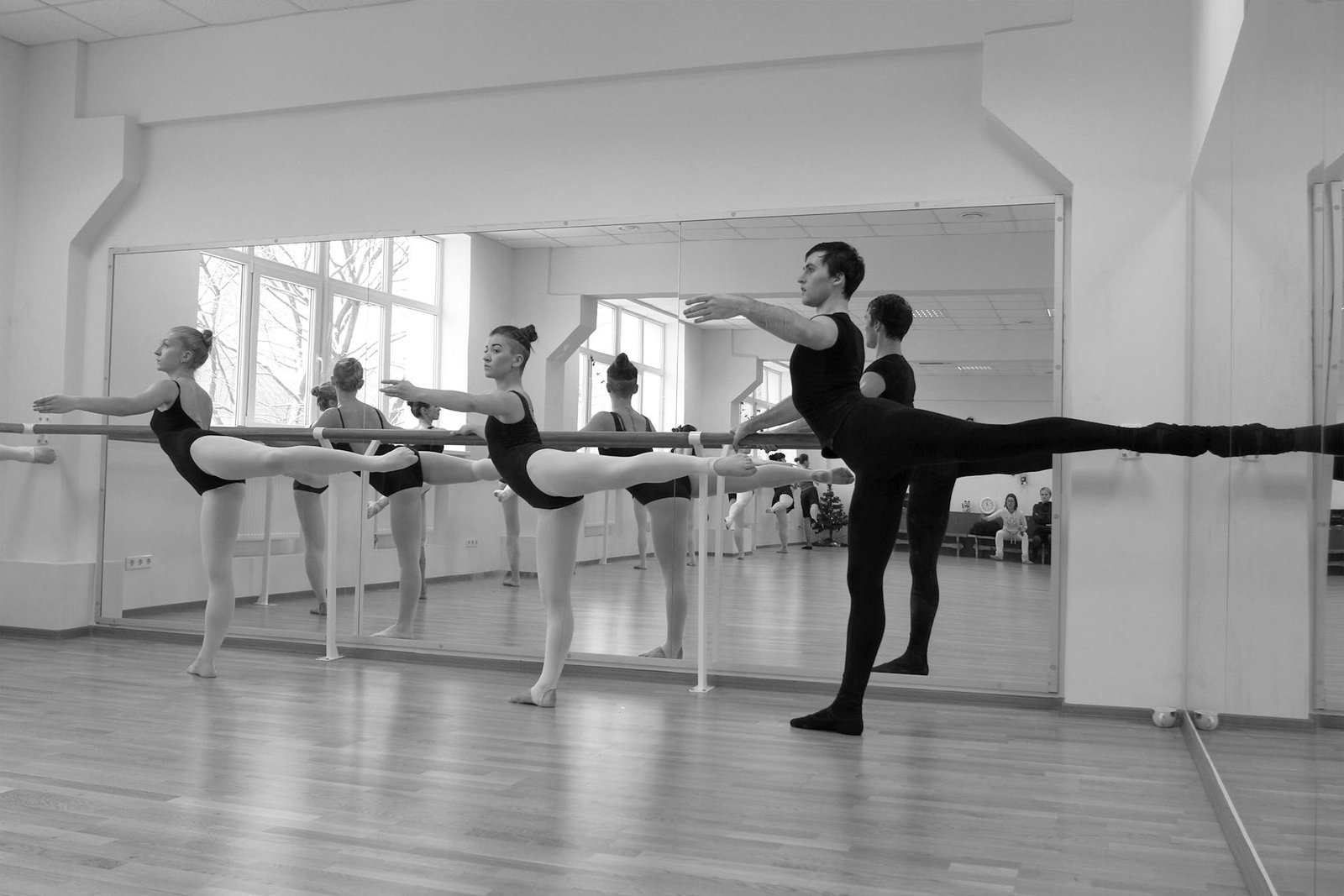
- Barre warm-up (30–35 min): All exercises are done holding the barre. Pliés, tendus, dégagés, and rond de jambes. These build strength, flexibility, and technique simultaneously.
- Center work (20–25 min): Same exercises repeated without the barre. More challenging, more rewarding. Includes balance work and small jumps.
- Across the floor (10–15 min): Simple traveling combinations — chassés, glissades, simple turns. The most fun part of most beginner classes.
- Cool-down/stretch: Floor stretches targeting hips, hamstrings, and the lower back.
What Will Be Hard (and Why That’s Fine)
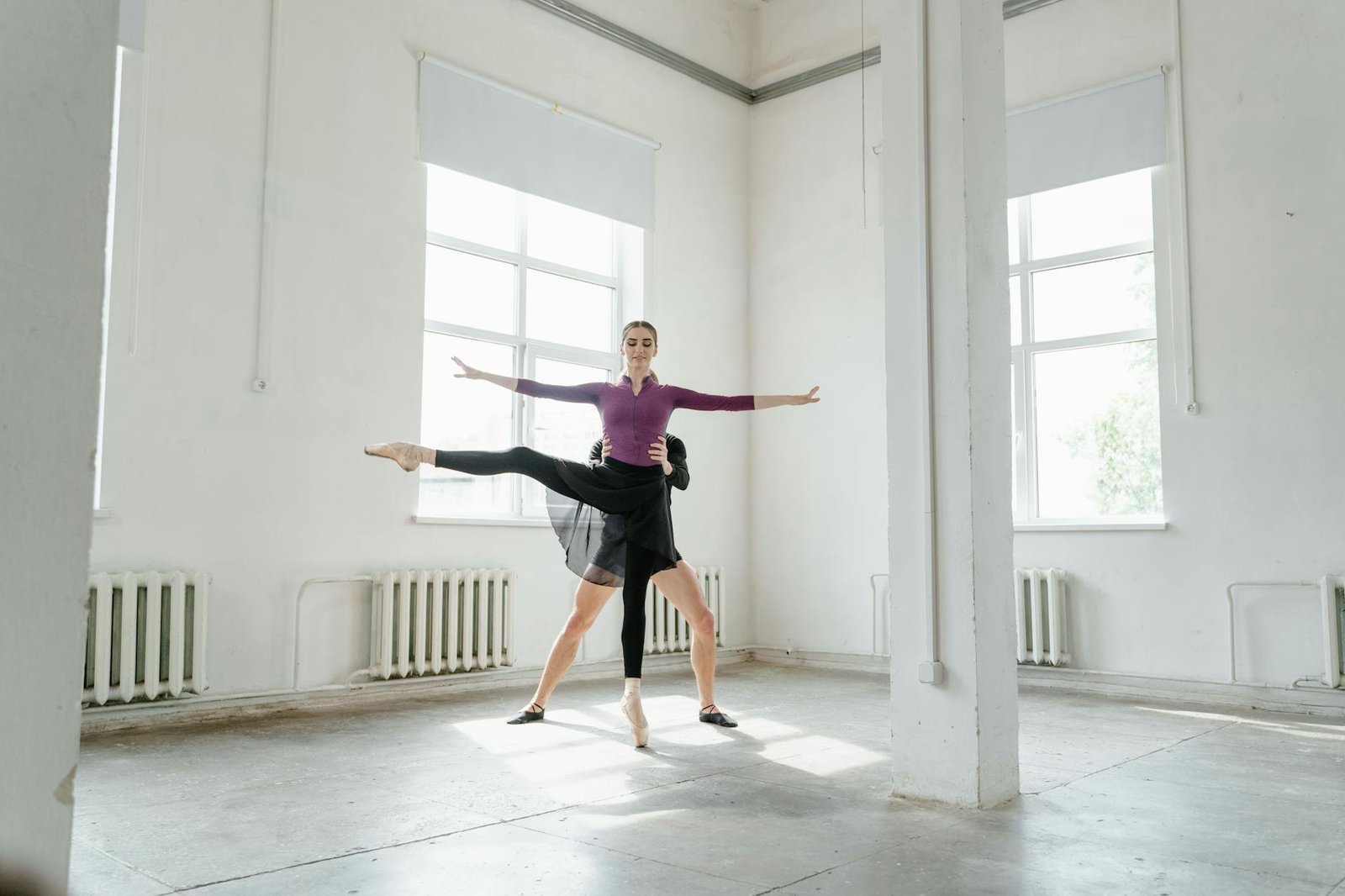
- Turnout: The outward rotation of the legs from the hip takes months to develop. Everyone starts with limited turnout. Working within your natural turnout is correct — forcing it causes injury.
- Remembering combinations: Ballet has a French vocabulary and combinations are called out in French. For the first 4–8 classes, you’ll be following other students more than hearing the words. This is expected and normal.
- Coordination: Hands, feet, head, and eyes all have specific positions simultaneously. The coordination comes with time.
Realistic Progress for Adult Ballet
- 1 month: Basic barre exercises feel familiar, you understand the class structure
- 3 months: Executing basic combinations without constantly watching others, visible improvement in flexibility
- 6 months: Noticeably better balance, turnout improving, beginning to remember French terminology
- 1 year: Moving from beginner to elementary level, possibly transitioning to a more advanced beginner class
Training Outside Class
Even 10–15 minutes of practice between classes accelerates progress significantly:
- Practice pliés and tendus at your kitchen counter (it functions as a barre)
- Work on your balance: stand in first position relevé and hold
- Stretch hips and hamstrings daily — flexibility is one of the most time-dependent aspects of ballet and benefits enormously from daily work
The most important thing: Go to class consistently. Two classes per week for six months beats one intensive class per week and then quitting from exhaustion. Ballet rewards patience and regular practice more than any other dance style.