Dance conditioning is strength and fitness training tailored to the demands of dancing. Where general fitness improves overall health, dance conditioning builds the specific functional strength that directly improves your technique — balance, turnout, jump height, arm carriage, and injury resistance.
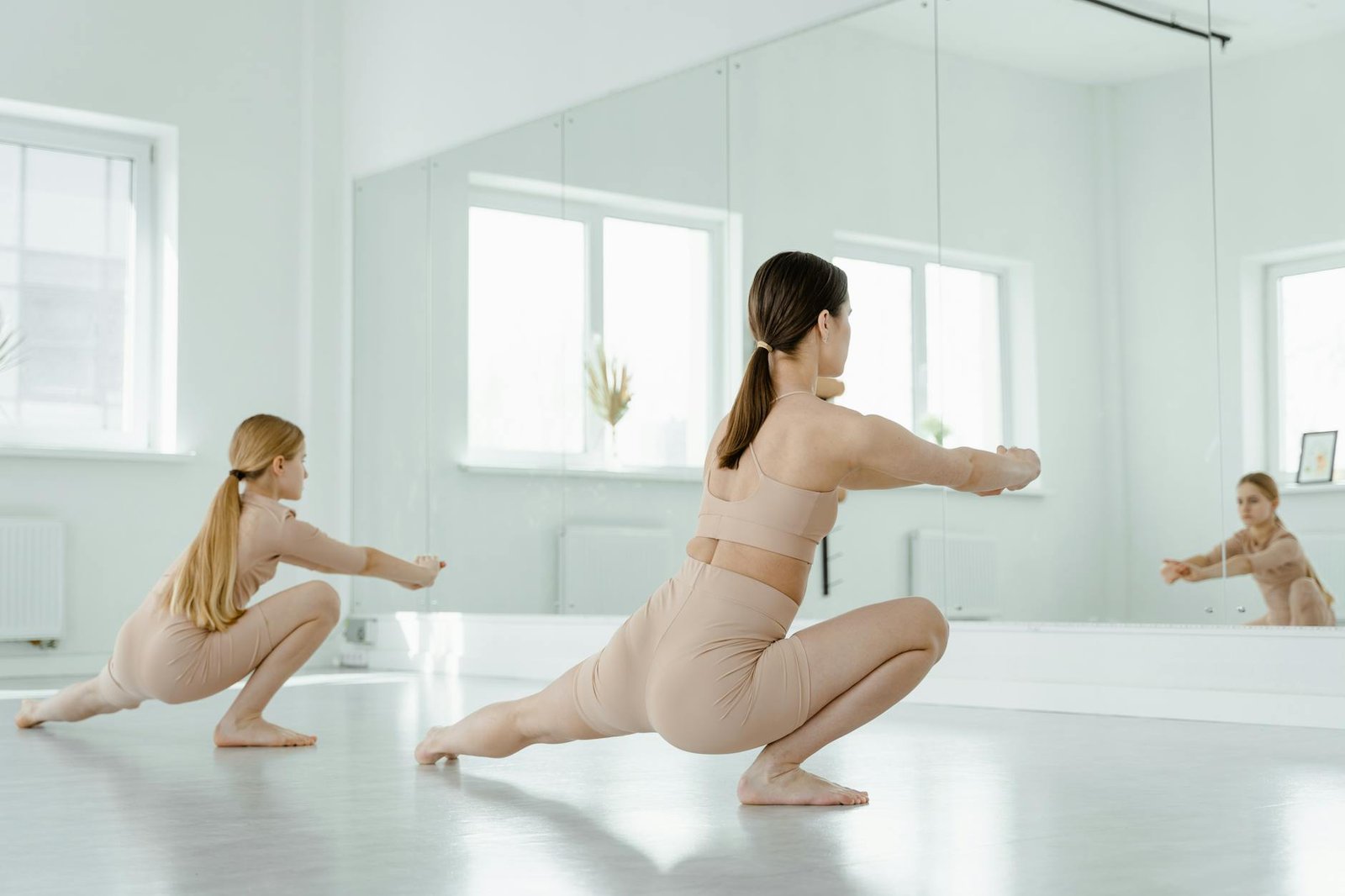
Core Conditioning: The Foundation of Everything
Every dance movement is initiated from, transmitted through, or stabilized by the core. Weak core muscles mean every off-balance moment becomes a fall, every arm movement disrupts the body’s stability, and jumps lack control.
Plank Hold
Forearms on the floor, elbows below shoulders, body in a straight line from head to heels. Hips neither lifted nor sagging. Hold 30–60 seconds. Gradually build to 2-minute holds. This is the most fundamental dance conditioning exercise.
Dead Bug
Lying on your back, arms vertical and knees bent to 90° in the air. Slowly extend one arm overhead and the opposite leg toward the floor simultaneously, keeping the lower back pressed against the floor. Return and switch sides. 10 repetitions each side. Builds deep core stability without compressing the spine.
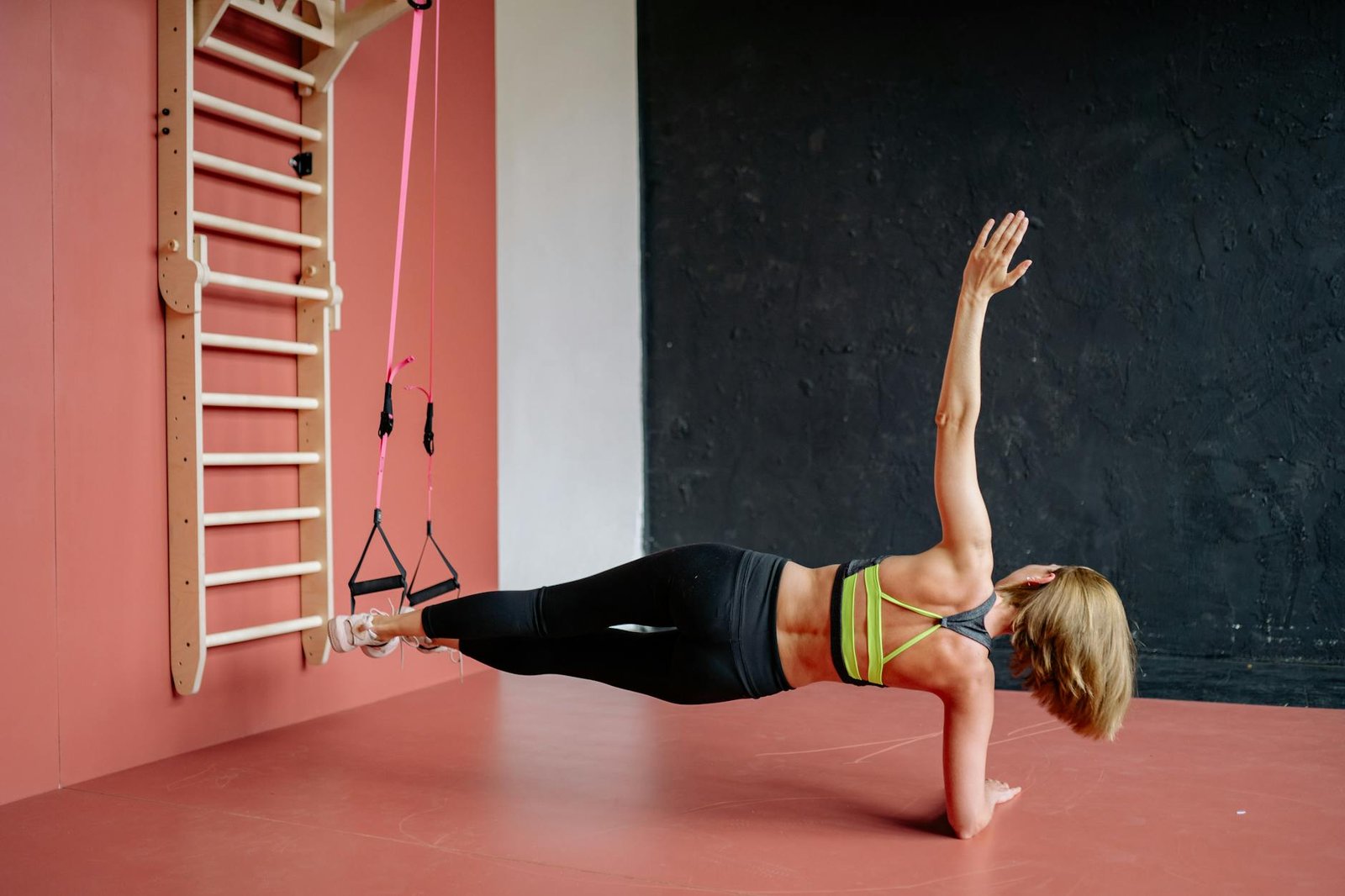
Side Plank
Side-lying, supported on one forearm and the side of the foot. Hips elevated. Hold 20–30 seconds, build to 60 seconds. Targets the lateral stabilizers (obliques, quadratus lumborum) that keep the hips level in arabesque and extension work.
Hip Strength: For Turnout, Extension, and Arabesque
Clamshells with Resistance Band
Lie on your side with a resistance band around the thighs just above the knees. Knees bent to 45°, feet together. Keeping feet together, lift the top knee like a clamshell opening. Lower slowly. 15–20 repetitions each side. Targets the gluteus medius and external hip rotators — the muscles that control turnout.
Arabesque Lifts
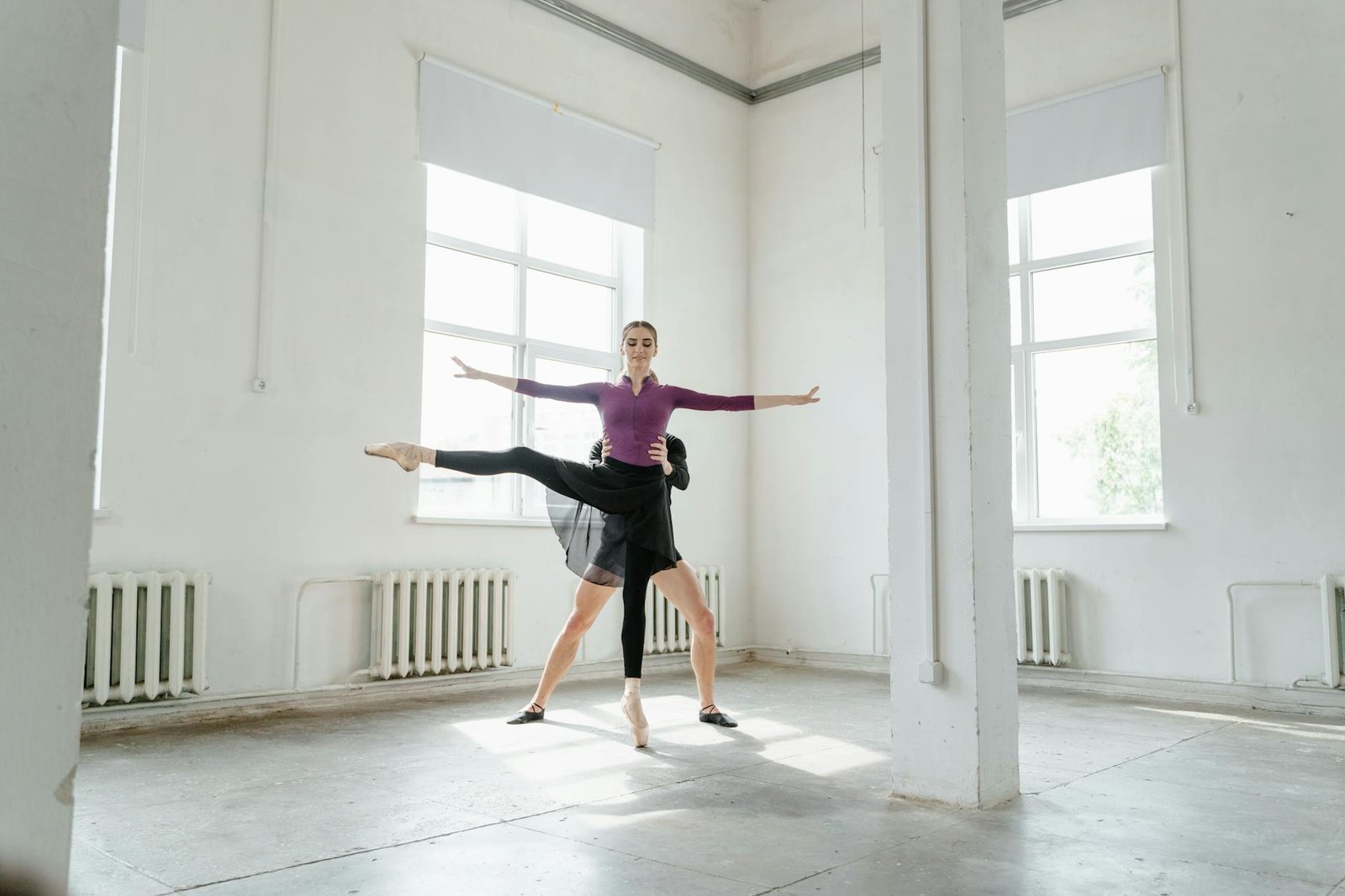
Standing, hold a barre or wall for balance. Hinge slightly forward from the hips (parallel to floor is not required). Lift one leg behind you, keeping both hips square to the floor. Hold 5 seconds, lower slowly. 10–15 repetitions each side. Builds the glutes and hamstrings needed for arabesque height and control.
Single-Leg Bridge
Lying on your back, one knee bent, one leg extended straight. Push through the bent foot to lift the hips off the floor. Hold 3–5 seconds at the top. Lower slowly. 12 repetitions each side. Targets glutes and hamstrings on one side at a time, correcting imbalances.
Ankle and Foot Strength
Relevé Repetitions
Standing on one leg, rise to full demi-pointe (relevé), lower slowly. 15–20 repetitions each side. The key is the slow lower — this eccentric phase builds the calf and ankle stabilizer strength that prevents ankle injuries and improves relevé quality.
Towel Scrunches
Lay a small towel flat on the floor. Using only your toes, scrunch the towel toward you. Release and repeat. 3 sets of 30 seconds per foot. Builds intrinsic foot muscles — small muscles in the arch that support correct foot function and help prevent plantar fasciitis.
Upper Body and Arm Endurance
Wall Push-Ups
For dancers new to upper body work: stand facing a wall, place hands shoulder-width apart, and perform push-ups against the wall. 15–20 repetitions. Builds chest and shoulder endurance for sustained port de bras and arm-heavy styles.
Resistance Band Rows
Anchor a resistance band at mid-height. Pull the band toward your midsection, squeezing the shoulder blades together. 15 repetitions. Builds the mid-back muscles needed to keep shoulders down and back during port de bras — a persistent weakness in many dancers.
A Simple Weekly Schedule
- 3 days/week: Core circuit (plank, dead bug, side plank) — 15 minutes
- 3 days/week: Hip and leg conditioning (clamshells, arabesque lifts, single-leg bridge) — 20 minutes
- Daily: Ankle exercises (relevés and towel scrunches) — 5 minutes
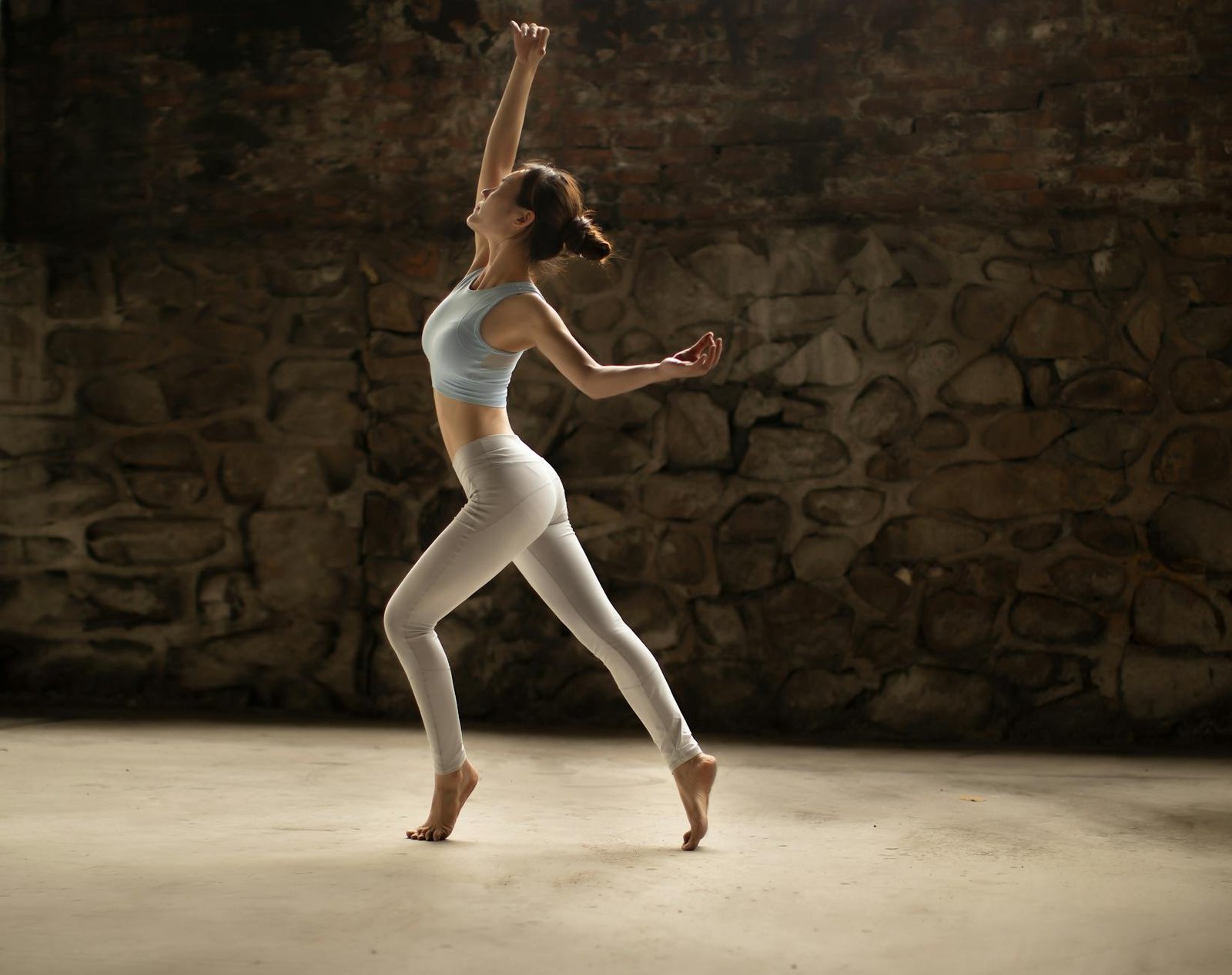
This fits around a regular class schedule and produces noticeable technique improvements within 6–8 weeks of consistent work.
You might also like: