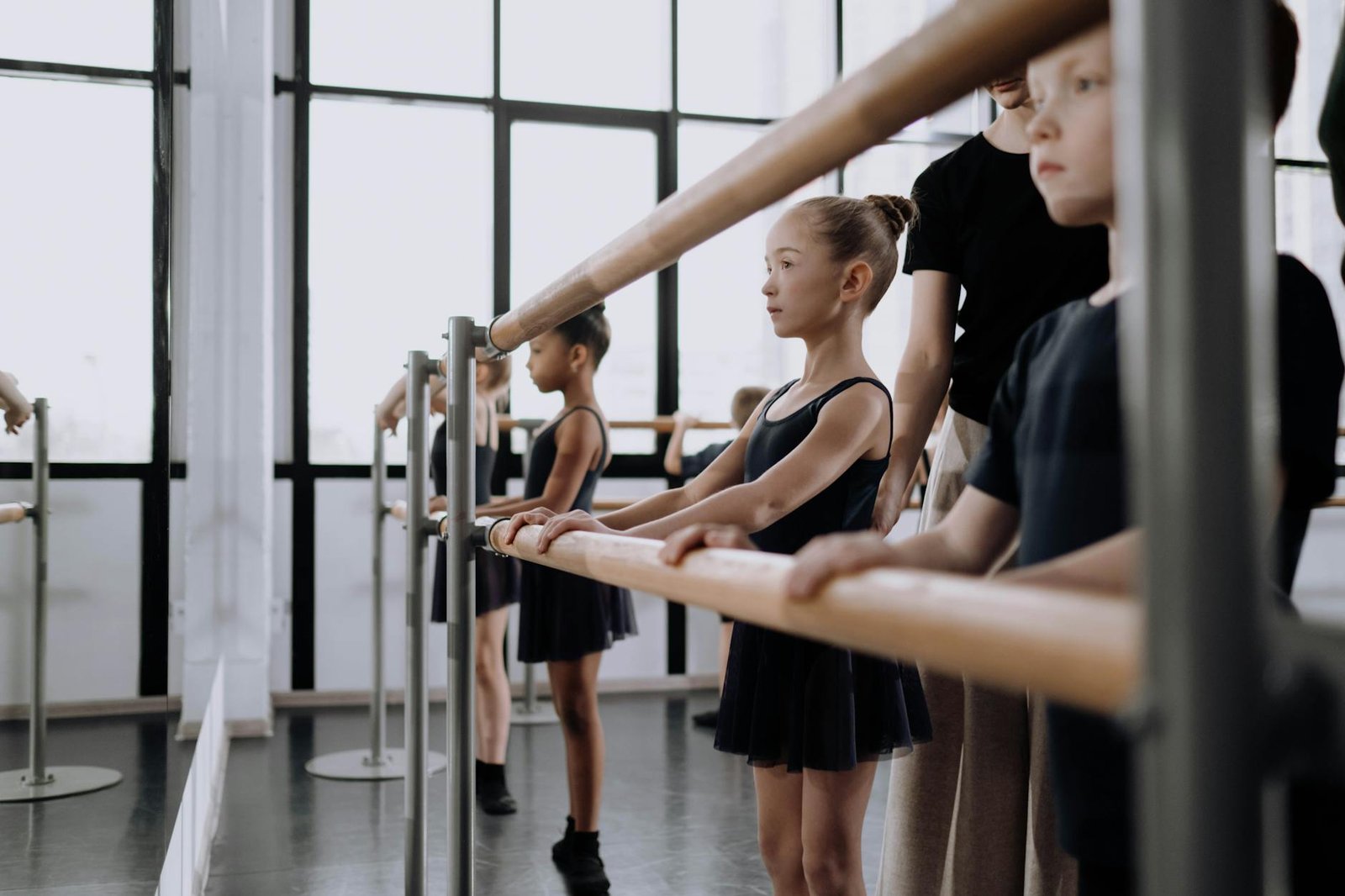
Walking into your first ballet class and hearing the teacher call out “tendu à la seconde, demi-plié, relevé” can be genuinely disorienting. The French vocabulary of ballet isn’t just tradition — it’s a precise technical language used consistently in schools worldwide. Learning it accelerates your understanding of class and opens up the instruction you’re receiving.
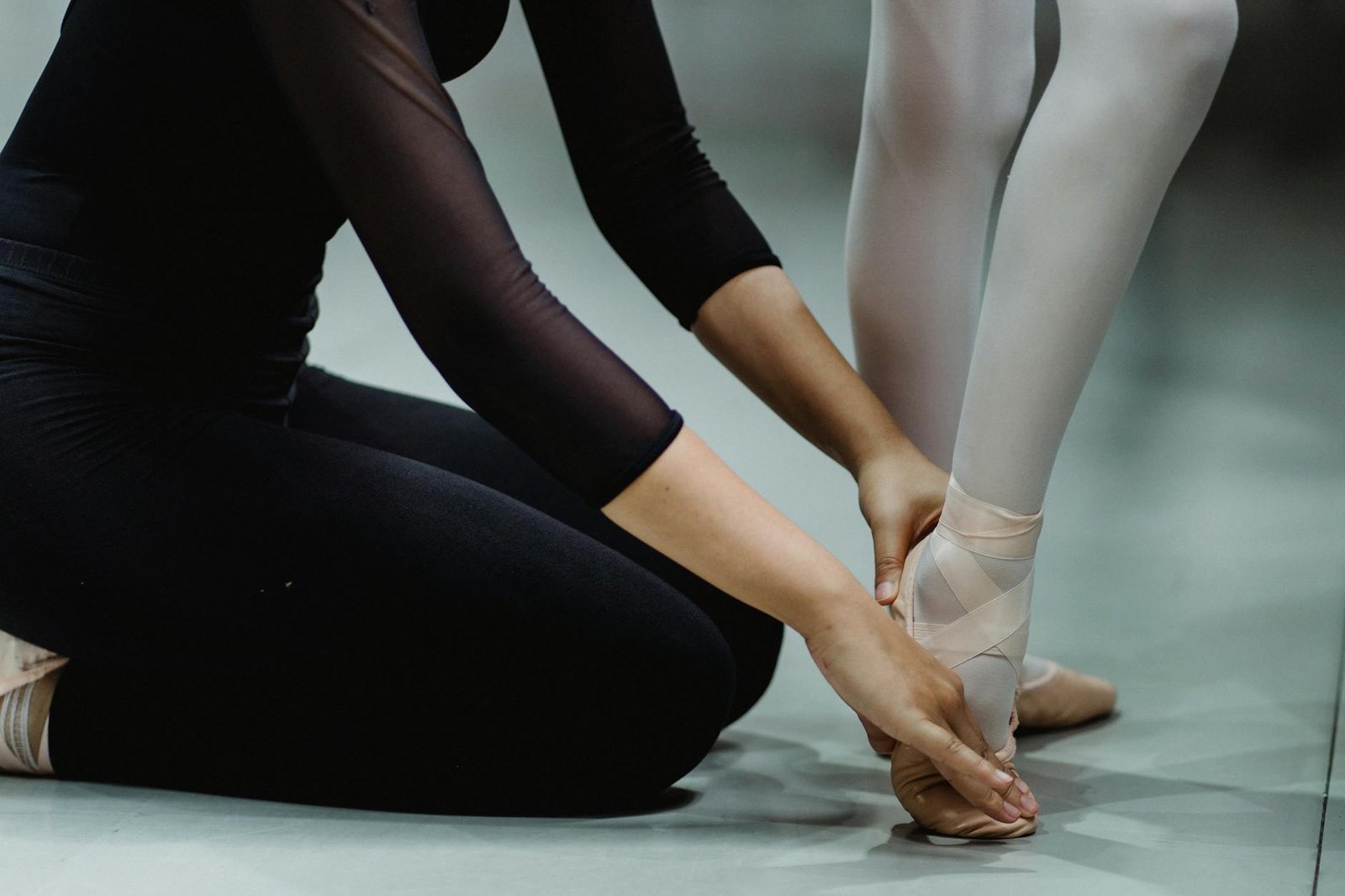
Foundational Position Terms
- Turnout: Outward rotation of the legs from the hip socket. The defining postural feature of classical ballet.
- En dehors: “Outward.” A movement or position that rotates away from the body.
- En dedans: “Inward.” A movement or position that rotates toward the body.
- À la seconde: “To the second [position].” The leg is out to the side at 90°.
- Devant: “In front.” The working leg is in front of the body.
- Derrière: “Behind.” The working leg is behind the body.
- En avant: “Forward.” Moving or facing forward.
- En arrière: “Backward.” Moving or facing backward.
Barre Work Terms
- Plié: “Bent.” A bending of the knees. Demi-plié = half bend; grand plié = full bend.
- Tendu: “Stretched.” Sliding the foot along the floor to an extended pointed position without lifting.
- Dégagé / Jeté: Like a tendu but with the foot slightly lifted off the floor. “Disengaged.”
- Rond de jambe: “Circle of the leg.” The working leg traces a semicircle on the floor or in the air.
- Fondu: “Melted.” A slow, melting bend and rise of the supporting leg simultaneously with movement of the working leg.
- Frappé: “Struck.” A sharp, brushing strike of the foot against the floor, producing a quick, crisp movement.
- Adagio: Slow, sustained exercises. Usually the slow, controlled center of the barre sequence.
- Grand battement: “Large beating.” A large leg swing upward to 90° or higher.
- Relevé: “Raised.” Rising onto the balls of the feet (demi-pointe) or the tips of the toes (pointe).
Center Work Terms
- Port de bras: “Carriage of the arms.” Exercises focusing on arm movement and coordination.
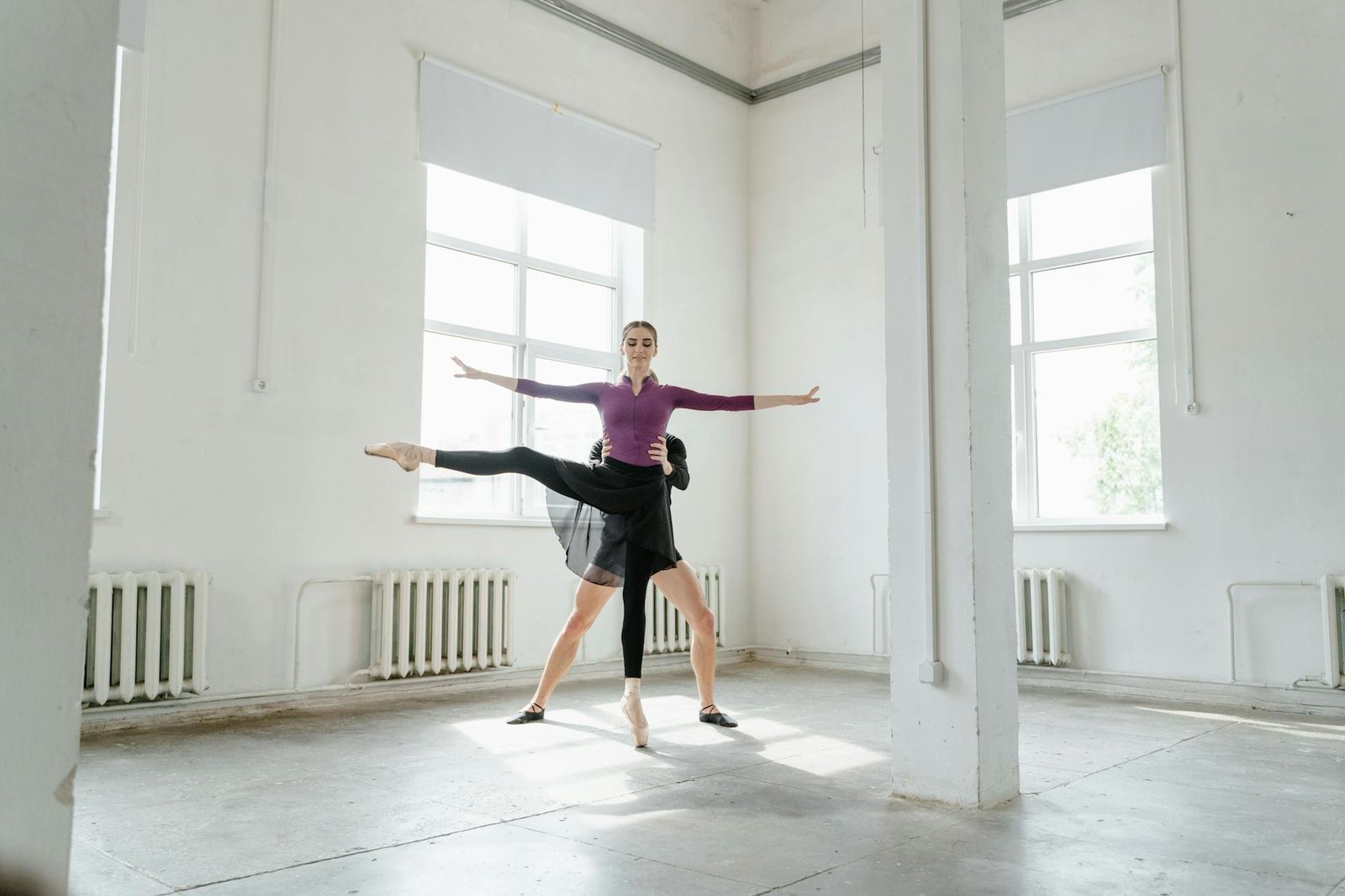
- Arabesque: A position where the supporting leg is straight and the working leg is extended behind the body.
- Attitude: Like arabesque, but the working leg is bent at the knee rather than fully extended.
- Développé: “Developed.” The working leg unfolds from passé to a fully extended position.
- Passé / Retiré: The working foot drawn up to the knee of the supporting leg, toes pointed against the knee.
- Pirouette: A turn on one leg. En dehors = turning away from the supporting leg; en dedans = turning toward it.
- Chainés: “Links.” Rapid half-turns on both feet, traveling across the floor.
Jumping Terms
- Sauté: “Jump.” A jump from two feet to two feet in the same position.
- Changement: “Change of feet.” A jump from fifth position that lands with the feet switched.
- Assemblé: “Assembled.” A jump where one leg brushes out and both feet assemble (land together) in fifth position.
- Jeté: “Thrown.” A jump from one foot to the other. Grand jeté is the large split leap.
- Glissade: “Glide.” A gliding step that typically prepares for a jump.
- Pas de chat: “Step of the cat.” A jumping step where both feet lift and land in sequence, feet passing through passé.
Traveling Step Terms
- Chassé: “Chased.” A traveling step where one foot “chases” the other.
- Pas de bourrée: A three-step transition connecting phrases of movement.
- Waltz step / Pas de valse: A three-count traveling step with rise and fall matching waltz rhythm.
- Fouetté: “Whipped.” A turn where the working leg whips around to generate rotation energy.

Quality and Direction Terms
- Croisé: “Crossed.” A direction where the working leg crosses in front of the body relative to the audience.
- Effacé: “Shaded.” An open direction where the body is angled so the working leg is the one further from the audience.
- Épaulement: “Shouldering.” The slight twist of the shoulders and inclination of the head that gives classical poses their characteristic épaulement quality.
- En face: Facing directly forward toward the audience.
- Aplomb: Perfect vertical balance and alignment. “She has wonderful aplomb.”
Print this list and keep it in your dance bag for the first few months. As these terms become automatic through repetition in class, you’ll spend less mental energy on vocabulary and more on the actual movement — which is exactly when technique starts to improve rapidly.