Dance conditioning requires specific tools because the demands are specific — hip rotation strength, ankle stability, thoracic mobility, and eccentric leg control aren’t the same as general gym fitness needs. This is the equipment that addresses those needs without requiring a gym membership or dedicated equipment room.
The Non-Negotiables
Resistance Bands Set (~$15–$25)
A set of loop bands and a long band covers the majority of dancer-specific conditioning exercises: clamshells for hip rotators, arabesque resistance for glutes, ankle strengthening, and upper back exercises for port de bras endurance. Theraband is the professional standard brand used in dance medicine clinics. A set of 3–5 resistance levels handles both rehabilitation exercises and progressive strengthening.
Foam Roller (~$20–$35)
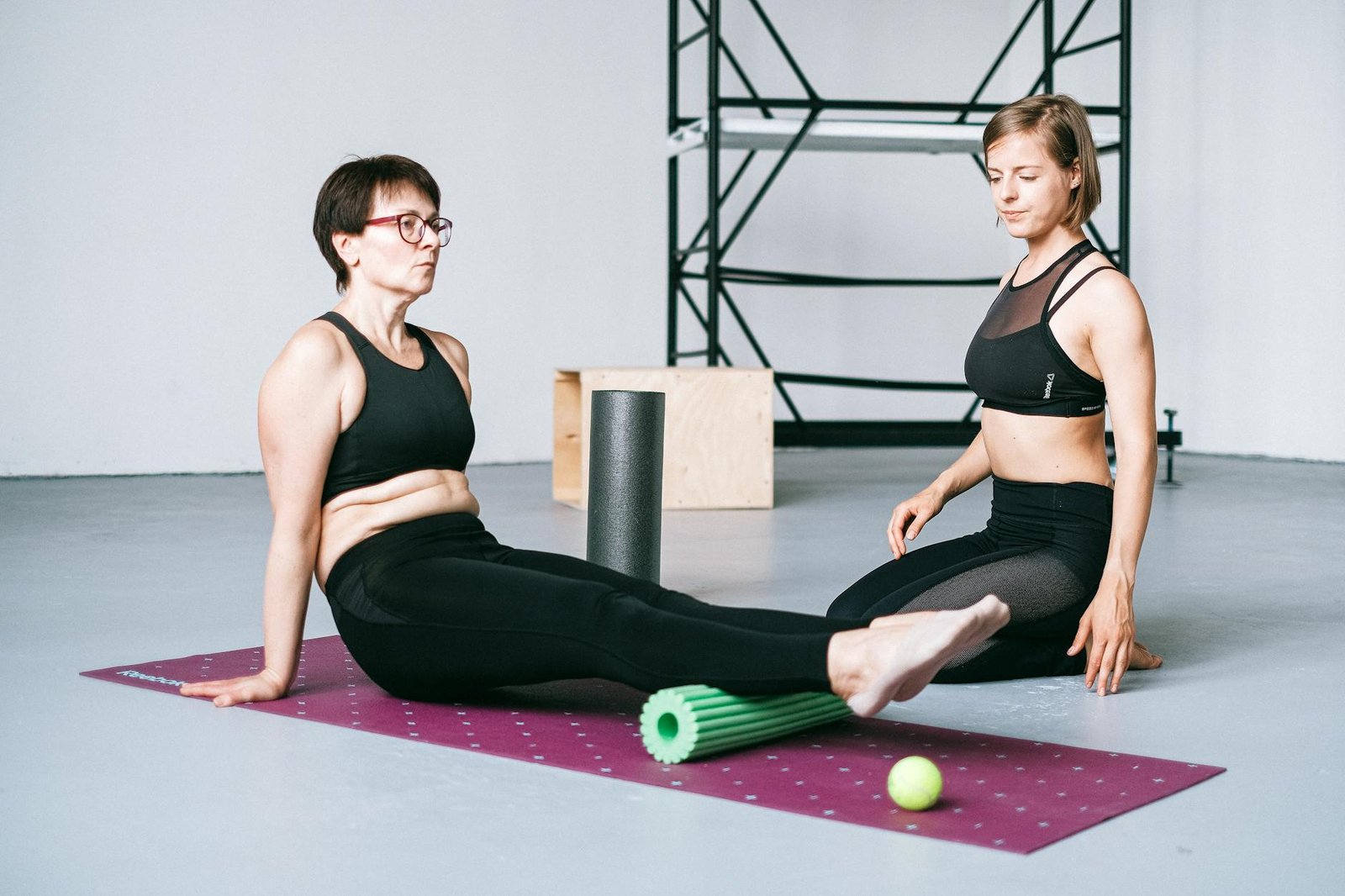
Used primarily for recovery — rolling out the calves, IT band, thoracic spine, and hip flexors after training. Also used for thoracic extension mobility (lying over the roller at mid-back level), which improves overhead port de bras range. A standard 18-inch high-density foam roller works for all of this; textured rollers are preference, not necessity.
Yoga Mat (~$20–$50)
For floor conditioning exercises, stretching, and any conditioning work done off the dance surface. A standard 3mm to 6mm yoga mat provides adequate cushioning for conditioning exercises. Dance conditioning doesn’t require a thick mat — you want to feel the floor, not be disconnected from it.
Worthwhile Additions
Balance Board (~$30–$60)
A wobble board or balance disc used for ankle stabilization exercises builds the proprioceptive training that directly reduces ankle sprain risk. Standard in athletic training programs for good reason — particularly valuable for dancers who do significant jumping or frequently work on one leg.
Ankle Weights (~$15–$30)
1–2 lb ankle weights for arabesque and battement exercises add resistance that builds the glute and hamstring strength needed for leg height and control. Not appropriate for beginning students — add once you have established technique to avoid compromising form under load.
Pull-Up Bar (~$25–$35)
A doorframe pull-up bar builds the latissimus dorsi and posterior shoulder strength needed to sustain correct port de bras through long combinations. Also useful as an impromptu inversion assist (drape resistance bands from it for assisted stretching). A worthwhile addition for any dancer doing significant upper body arm work.
Massage Gun (~$80–$150)
For dancers training 4+ days per week, percussive massage therapy reduces muscle soreness and recovery time. The Theragun Mini or Hyperice Hypervolt Go are both compact enough to fit in a dance bag and effective enough to make a real difference. Not essential for occasional dancers, but high-value for dedicated training schedules.

What You Don’t Need
- Ballet barre-specific conditioning “systems” — resistance bands and a barre do the same thing
- Vibrating foam rollers — effective but $100+ premium over a standard roller with marginal additional benefit
- Reformer Pilates machines for home — studio Pilates is valuable; a $500 budget machine at home is not the same thing
- Electronic posture trainers — body awareness through training beats wearable correction
The Minimal Effective Kit
If you want the highest impact with the smallest spend:
- Theraband resistance band set ($20)
- Standard foam roller ($25)
- Yoga mat ($25)
Total: ~$70. These three items cover 80% of what a structured home dance conditioning program requires and fit in a single shelf of a closet.