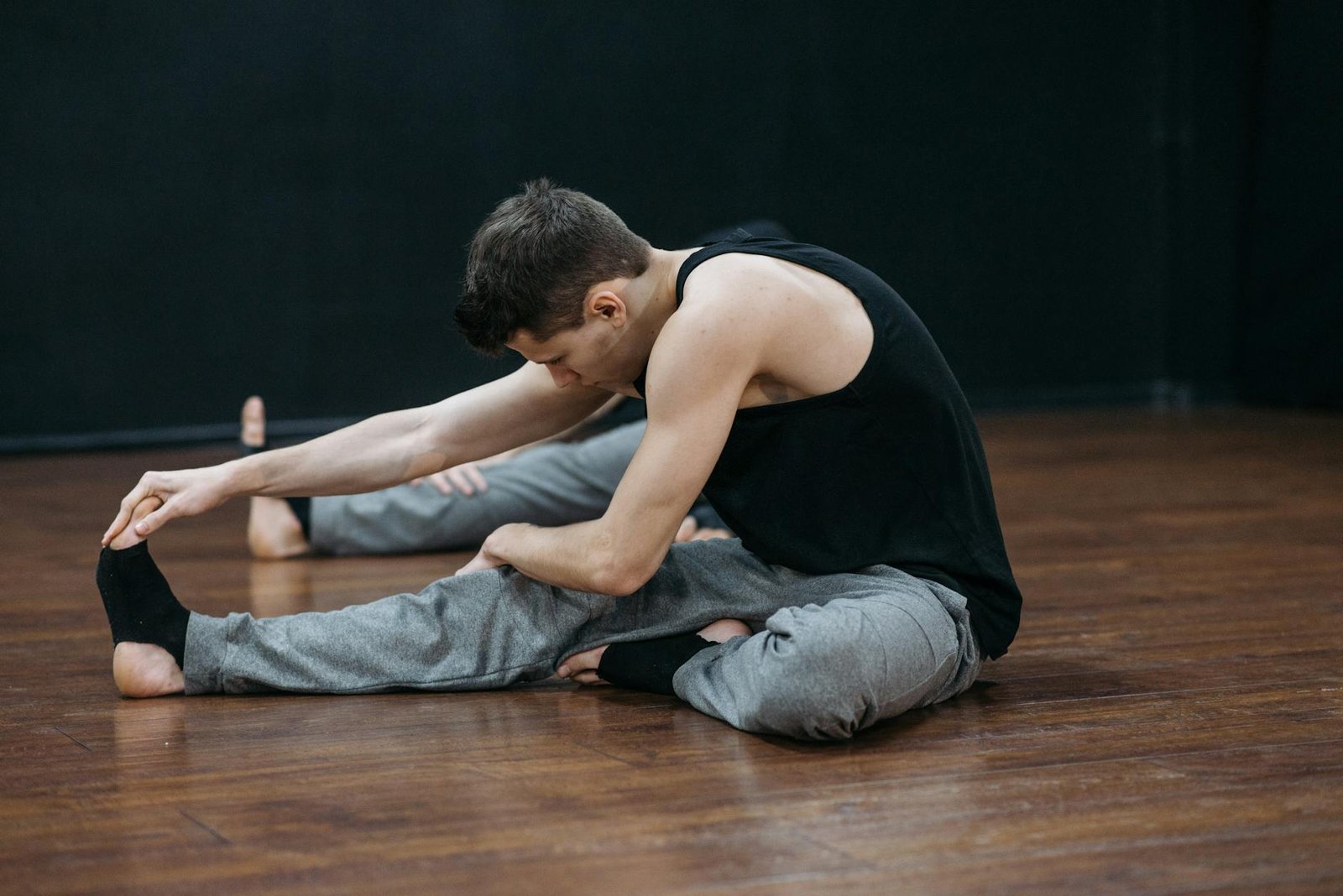
The best time to stretch for flexibility gains is immediately after class — muscles are warm, blood flow is high, and the tissues respond well to sustained lengthening. This 20-minute routine targets the flexibility areas most relevant to dance, regardless of your style.
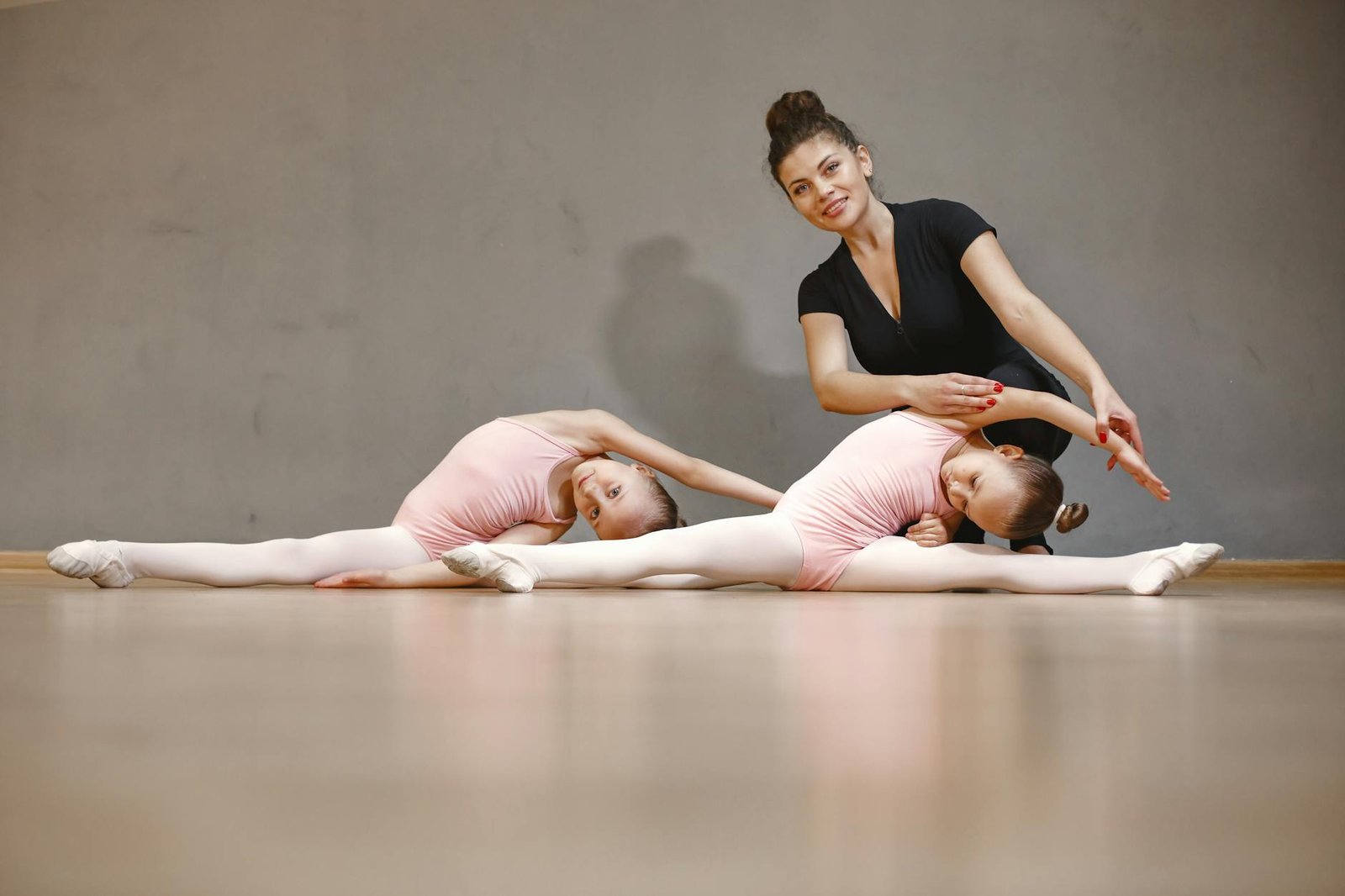
The Routine: A Note on Hold Times
For flexibility development (not just cool-down), hold each static stretch for 45–90 seconds. Research shows that 30-second holds build flexibility; 60–90 second holds build it faster. Use a timer — most people release too early when going by feel.
Breathe continuously. Tension increases with breath-holding; relaxing on exhale allows the muscle to lengthen further.
Hip Flexors (3 minutes)
Low Lunge (Crescent)
Step one foot forward into a deep lunge, back knee on the floor. Square the hips to the front. Gently press forward through the front hip, keeping the torso upright. You should feel the stretch in the front of the back thigh and hip, not the lower back. 60 seconds each side.
Variation — Elevated Back Foot
From the low lunge, place the back foot against a wall or on a chair. This deepens the hip flexor stretch. 45 seconds each side.
Hamstrings (4 minutes)
Seated Forward Fold
Sit with both legs extended straight forward, feet flexed. Hinge forward from the hips (not by rounding the back). Reach toward the feet, maintaining a long spine. 90 seconds.
Single-Leg Forward Fold
One leg extended, other foot bent in. Fold over the extended leg. Keep the toes of the extended leg pulled back (foot flexed). 60 seconds each side.
Standing Hamstring Stretch
Stand, place one heel on a low surface (a step or a chair seat). Keep both legs straight and hinge forward. 45 seconds each side.
Hip Rotators and Outer Hip (4 minutes)
Figure-Four (Piriformis Stretch)
Lying on your back, bend both knees. Place the right ankle across the left thigh just above the knee. Flex the right foot. Either hold behind the left thigh and gently draw toward the chest, or press the right knee away. You should feel this in the outer right hip. 90 seconds each side.
Seated Figure-Four
Seated upright, cross one ankle over the opposite knee (like a “4” shape). Gently lean forward. 60 seconds each side.
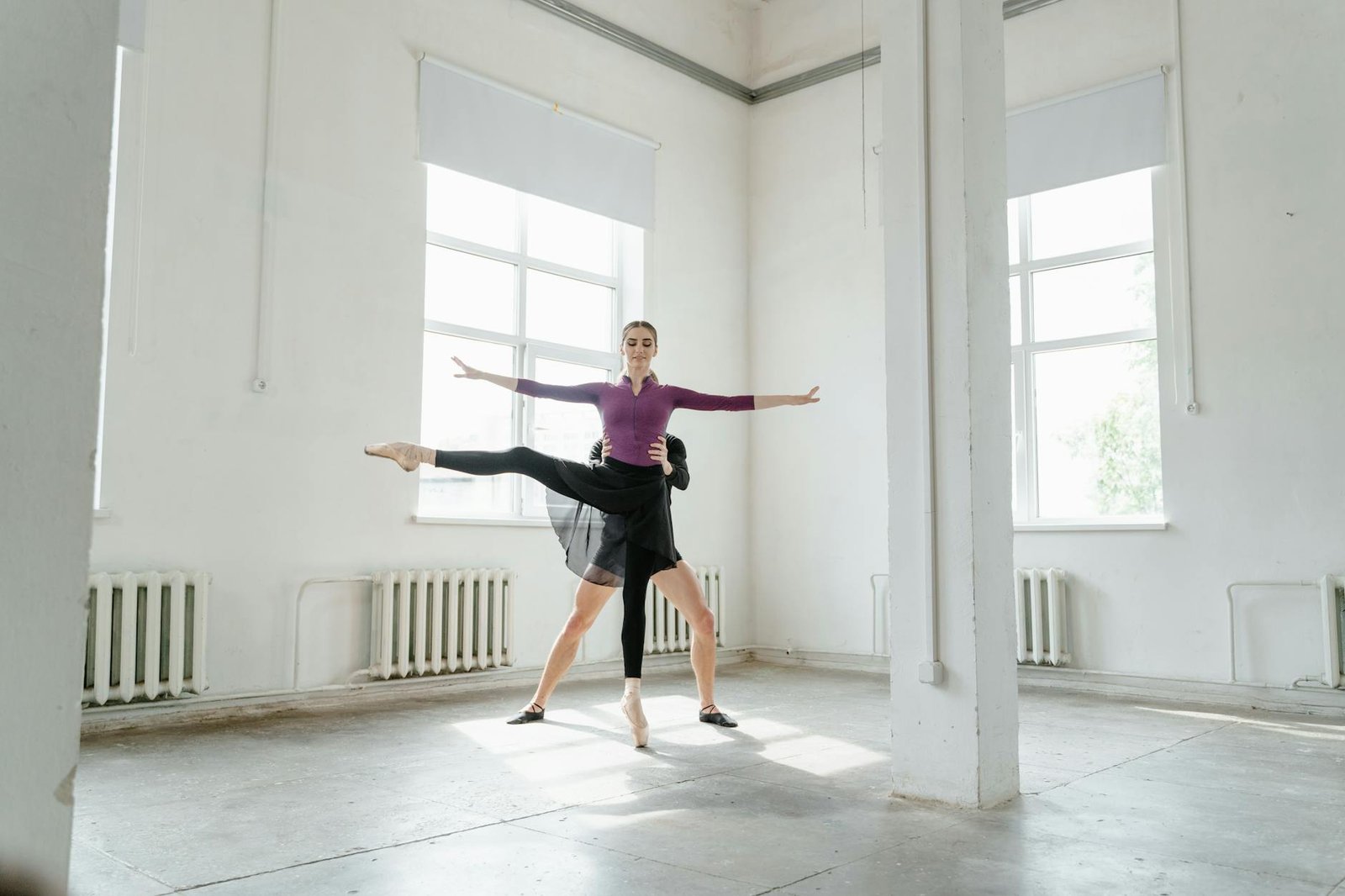
Inner Thigh / Groin (3 minutes)
Butterfly Stretch
Seated, bring the soles of the feet together and let the knees fall outward. Hold the ankles and gently press the knees toward the floor using the elbows. The stretch is in the inner thighs, not the knees. 90 seconds.
Wide-Leg Forward Fold
From standing or seated, take feet/legs as wide apart as comfortable. Fold forward from the hips. Hold where you feel the stretch. 60 seconds.
Calves and Ankles (2 minutes)
Standing Calf Stretch
Step one foot forward, keep back leg straight and back heel flat on the floor. Lean into the front foot. Straight back leg targets the gastrocnemius; bent back knee targets the deeper soleus. 45 seconds each stretch, each side.
Ankle Flexion
Seated, place one foot on the opposite knee. Gently pull the toes toward you (dorsiflexion). Hold 30 seconds. Repeat with toes pointed away (plantar flexion) for ankle range of motion.
Back (2 minutes)
Child’s Pose
Kneel and sit back toward the heels, arms extended forward on the floor. A resting position that gently lengthens the lower back and thoracic spine. 90 seconds.
Seated Spinal Twist
Seated with both legs extended, bend one knee and cross the foot over the opposite leg. Rotate toward the bent knee, using the opposite elbow for leverage. Keep the spine tall. 45 seconds each side.
Consistency Beats Intensity
This routine done 4 days per week produces significantly better results than one long session per week. The tissues respond to cumulative stimulus, not single-session overload. Build it into your post-class routine and treat it as non-optional.