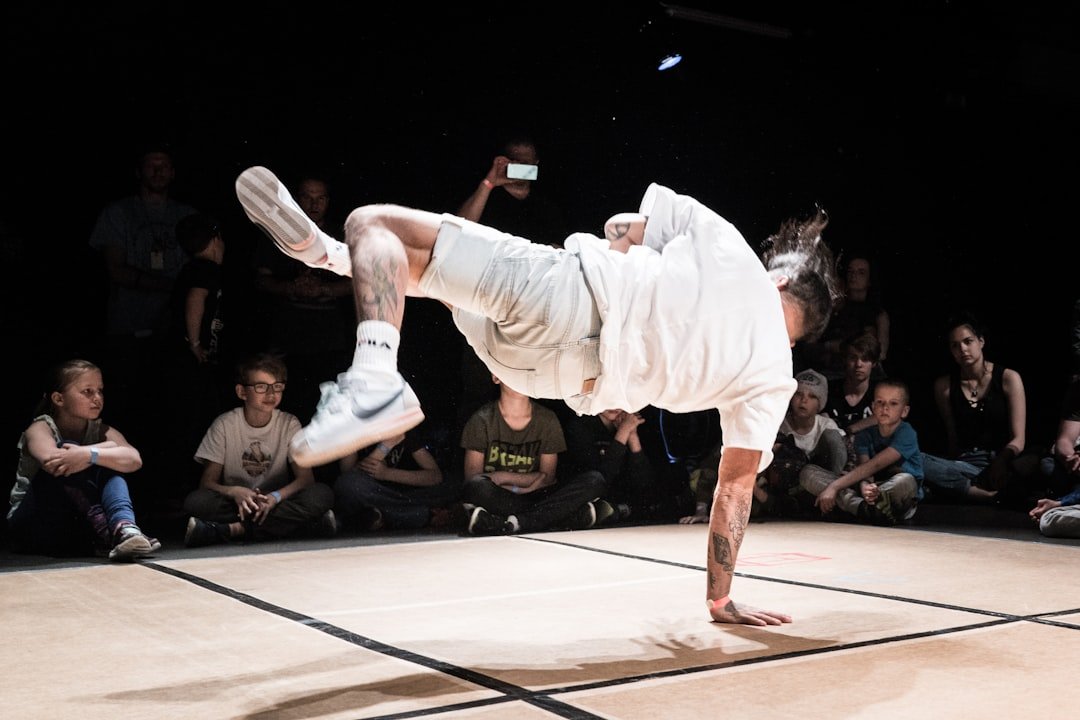
Breaking (the correct term — “breakdancing” was a media invention) is both a competitive sport and a cultural art form. It’s physically demanding, requires real athletic preparation, and has a deeper learning curve than most social dances. It’s also uniquely satisfying when moves click into place.
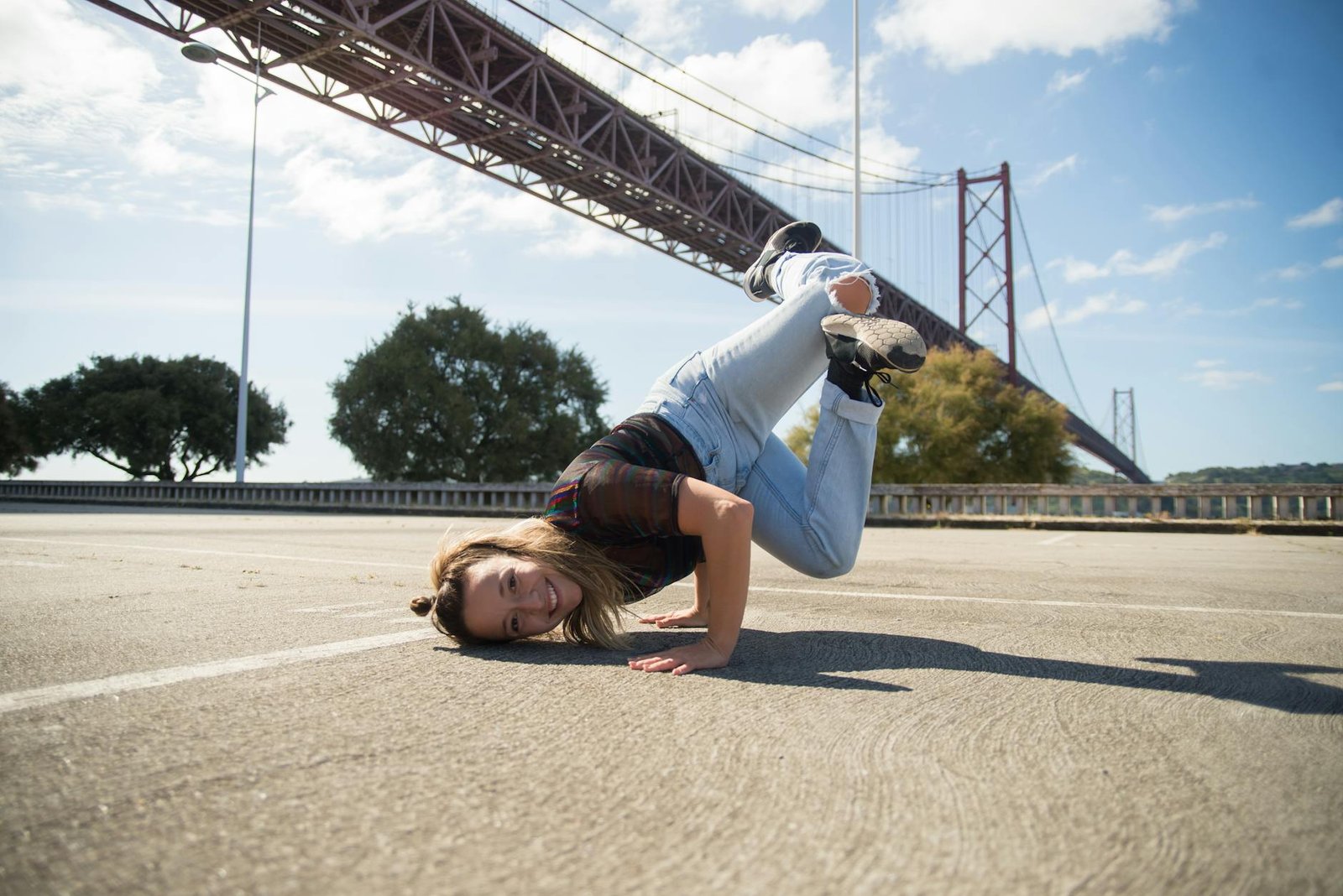
The Four Elements of Breaking
Breaking is organized into four interconnected elements:
- Top rock: Standing footwork performed to the music before going down to the floor. The entry into any breaking performance.
- Footwork (Go-down/Groundwork): Floor-based combinations using hands and feet. The technical foundation of breaking.
- Power moves: Spinning moves — windmills, headspins, halos. What most non-dancers picture when they imagine breaking.
- Freezes: Held positions that punctuate the music. Can be floor-based or inverted.
Beginners almost always start with top rock and basic footwork. Power moves and inverted freezes require significant upper body strength and conditioning — attempting them too early is how injuries happen.
Physical Preparation Before You Start
Before your first session, spend 2–4 weeks building this baseline:
- 10 push-ups in a row (wrist protection for floor work)
- 30-second plank hold (core for freezes and balances)
- Comfortable sitting cross-legged on the floor for 5+ minutes (hip flexibility for footwork)
- Light wrist conditioning: circles, stretches, and supported weight-bearing progressions
Breaking puts unusual demands on wrists and shoulders. Conditioning these before your first class prevents the most common beginner injuries.
First Moves to Learn: Top Rock
Basic Top Rock (Indian Step)
The fundamental top rock step: step forward and cross with the right foot, step left foot back to start, repeat on the other side. Arms swing naturally in opposition. This is the beginning of every cipher and battle entrance.
Side Step
Step to the right with the right foot, bring the left foot to meet it, then repeat. Arms swing to match. Simpler than Indian step, great for finding the rhythm before adding complexity.
First Moves to Learn: Footwork
Six-Step
The cornerstone of breaking footwork. Six movements of the feet rotating around the body in a circle while supported on hands. Each of the six steps has a specific foot position. Most beginners take 2–4 weeks to execute a clean six-step. This is normal — keep working.
CC (Kick Outs)
A simpler alternative to six-step — kick one leg out at a time while supporting weight on the other foot and opposite hand. Good for building the hand-foot coordination that six-step requires.
First Freeze to Learn: Baby Freeze
The baby freeze is the most accessible freeze for beginners: place one hand on the floor, bend the elbow, rest your hip on the back of that arm (using the elbow as a shelf), and balance with the other hand and feet off the floor. Hold for 2–3 seconds. This builds the body awareness and arm strength needed for more complex freezes.
Power Moves: Start Here, but Be Patient
If power moves are your goal, the headspin is more approachable for beginners than windmills (which require significant shoulder and back strength). Before attempting headspins:
- Build the ability to balance on your head with no hands (using the floor for light balance, not full weight)
- Strengthen neck muscles with gentle resistance exercises before any spinning on the head
- Practice on a soft mat with a beanie hat for friction and cushioning
Best Free Resources for Learning Breaking
- YouTube: Bilal Chbib — probably the clearest breaking instruction available free online, focuses on fundamentals
- YouTube: Cico TV — detailed footwork and power move tutorials from a champion breaker
- In-person breaking crews and jams: The culture of breaking involves community — finding a local crew and attending cyphers accelerates learning faster than solo home practice
Most important advice: Breaking is a social culture, not just a technique. Attending cyphers, battles, and jams — even as a spectator at first — gives you context that no tutorial video can. The culture teaches you how to use the moves, not just how to do them.
You might also like: