Why a Mirror Is One of the Most Powerful Tools in Your Dance Practice
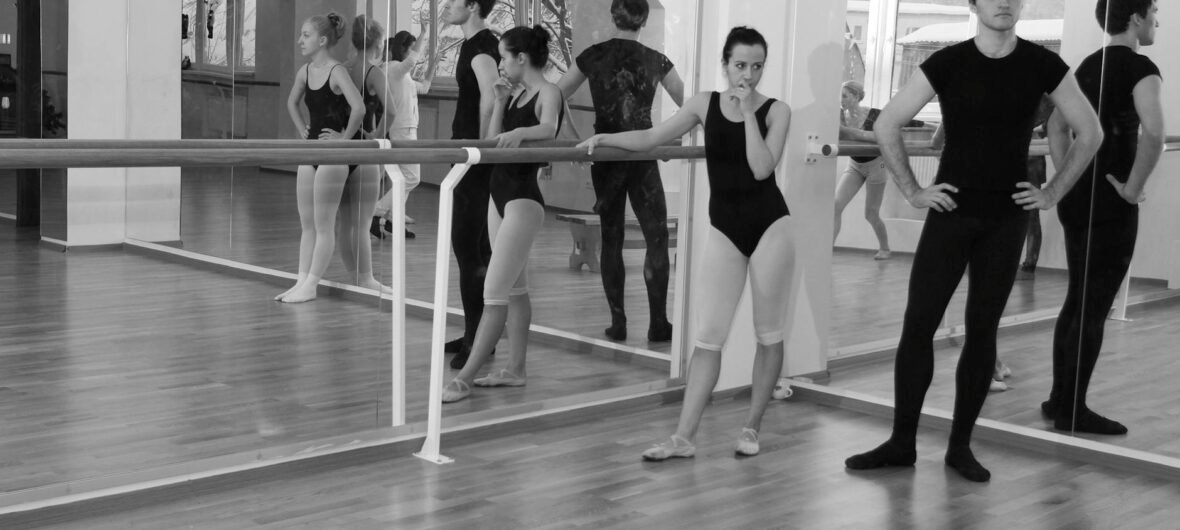
If you’ve ever watched yourself dance and cringed — congratulations, you’re already using your mirror correctly. Knowing how to use a mirror effectively when practicing dance at home is a skill in itself, and most dancers, especially beginners, either rely on it too much or ignore it completely. The truth is, a mirror is like having a silent teacher in your living room. When used with intention, it can dramatically accelerate your progress, sharpen your technique, and help you develop the kind of body awareness that separates good dancers from great ones.
Set Up Your Mirror Space for Maximum Visibility
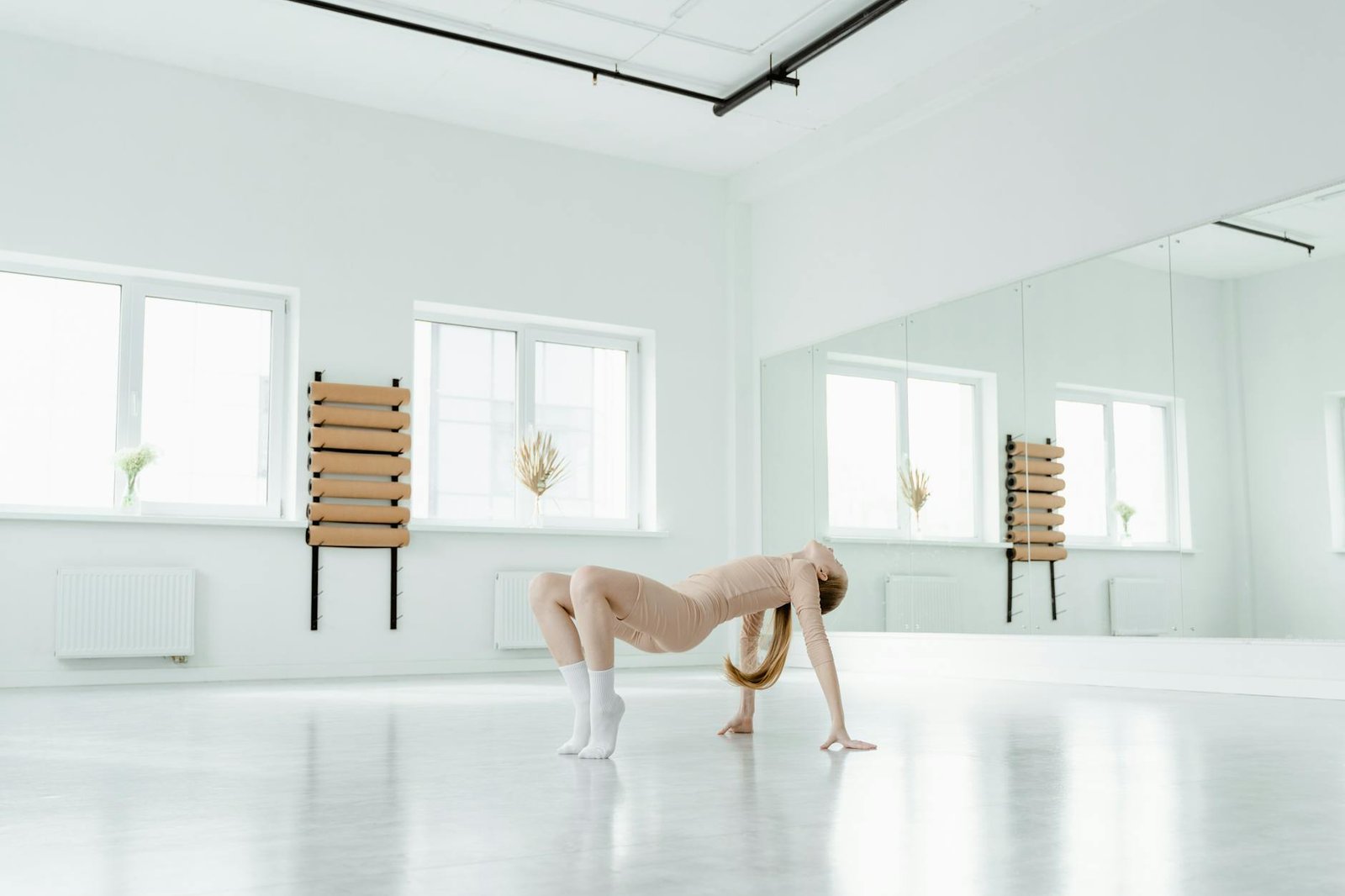
Before you even start dancing, your mirror setup matters more than you might think. A poorly positioned mirror can give you a distorted view, cause you to compensate your posture, or simply not show enough of your body to be useful.
- Go full-length or go home: A full-length mirror (at least 48 inches tall) is non-negotiable. Options like the Frameless Full-Length Mirror by Hamilton Hills (available on Amazon) are affordable, wall-mountable, and provide a clear, distortion-free reflection.
- Position matters: Place the mirror directly in front of your primary practice spot. Avoid angling it — a straight-on view gives you the most accurate feedback on symmetry and alignment.
- Check your lighting: Natural light or bright overhead LEDs work best. Avoid harsh side lighting that creates shadows and makes it hard to see the details of your movement.
- Consider width: If you’re practicing styles like contemporary, hip-hop, or ballroom, a wider mirror (or two mirrors placed side by side) lets you see your full arm span and footwork simultaneously.
Portable mirror panels like the Niubee Full Length Floor Mirror are a great option if you’re renting or don’t want to drill into walls.
Don’t Stare — Learn to Glance Strategically
Here’s one of the most common mistakes dancers make: they lock their eyes on the mirror and never look away. This might feel productive, but it actually creates a dependency that can hurt your performance on stage or in social dance settings where there’s no mirror to guide you.
Instead, use what professional dancers call strategic glancing:
- Practice first, then check: Run through a combination or phrase from memory, then glance at the mirror to assess what you felt versus what actually happened.
- Focus on one body part at a time: During a single run-through, only watch your arms. Next run, only check your footwork. This targeted approach builds real awareness much faster than vague overall observation.
- Use peripheral vision: Train yourself to keep your chin and gaze forward (as you would in performance) while still catching your reflection in your peripheral vision. This is especially useful for ballet and contemporary dancers.
Use the Mirror to Build Muscle Memory, Not Replace It
The mirror should be a feedback tool, not a crutch. True technique lives in your body — in the sensations of alignment, weight distribution, and muscle engagement. The mirror helps you verify what you feel, but the feeling has to come first.
Here’s a practical drill that works beautifully for this:
- Perform a movement or sequence with your eyes closed, focusing entirely on how it feels in your body.
- Open your eyes and repeat the same movement while watching the mirror.
- Notice the difference between what you felt and what you see. That gap is your learning zone.
Over time, this exercise trains your proprioception — your body’s internal GPS — so you can self-correct without needing a mirror at all. This is what allows dancers to perform confidently on stage, in the dark, or in any space.
Focus on Specific Technical Elements, Not Just the “Vibe”
It’s tempting to just watch yourself dance and evaluate whether it “looks cool.” But that kind of vague assessment won’t make you a better dancer. When you step in front of that mirror, come with a checklist.
What to look for based on your dance style:
- Ballet/Contemporary: Check turnout consistency, the line of your arms (port de bras), the height of your extensions, and whether your hips are level.
- Hip-Hop/Street Dance: Look at your timing relative to the beat, the sharpness or fluidity of your isolations, and whether your chest and shoulders are doing the work they should be.
- Latin/Ballroom: Watch your frame, shoulder level, hip action, and footwork precision.
- Salsa/Bachata: Pay attention to your basic step timing, body rolls, and whether your upper body is relaxed while your feet stay active.
Write down two or three specific things to focus on before each practice session. This transforms mirror time from passive watching into active self-coaching.
Record Yourself — The Mirror Has Limits
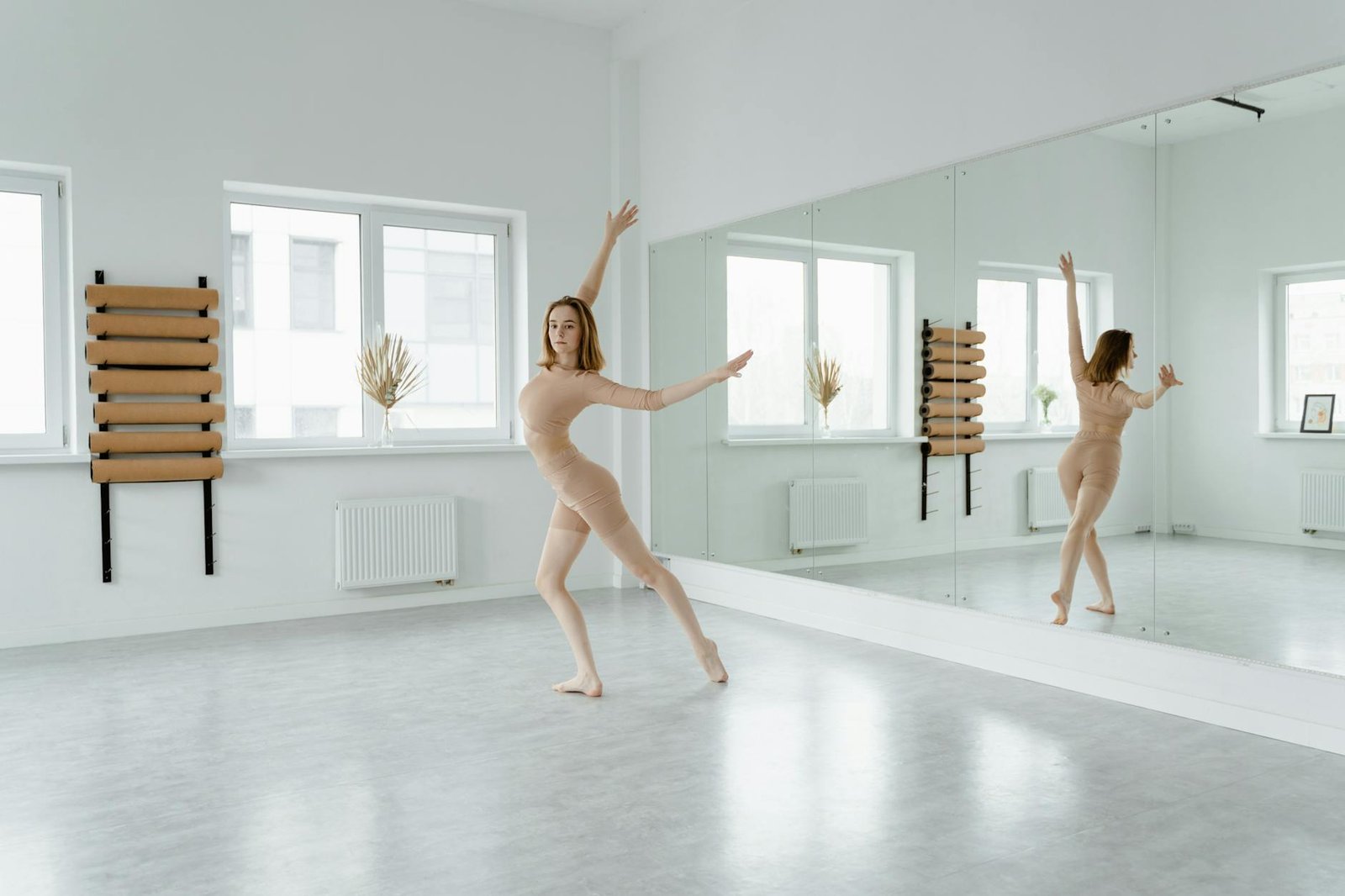
A mirror only shows you your front. It cannot show you your profile, your back, your three-quarter angle, or how you look in motion from the audience’s perspective. This is where a phone or tablet becomes your mirror’s best friend.
Set up a simple phone stand (the UBeesize Phone Tripod on Amazon is a dancer favorite for its flexibility and stability) and record yourself from multiple angles during practice. Then watch the footage with the same targeted approach you use at the mirror — one element at a time.
Some dancers find it helpful to record, then watch their playback in the mirror simultaneously — comparing real-time reflection with recorded footage to get the most complete picture of their movement.
Manage the Psychological Side of Mirror Practice
Let’s be real: dancing in front of a mirror can be emotionally challenging. It’s hard not to fixate on the things you don’t like about how you look, rather than focusing on how you move. This is an extremely common experience, especially for newer dancers.
Here are some strategies to keep your mirror sessions healthy and productive:
- Separate your body from your technique: The mirror is there to evaluate your movement quality, not your appearance. Remind yourself of this before every session.
- Celebrate small wins: When you notice your posture improving or a movement clicking into place, acknowledge it out loud or in your dance journal.
- Take mirror breaks: Spend the last 10 minutes of every practice dancing without the mirror. Cover it with a sheet if you need to. This builds confidence and reconnects you with the joy of dancing freely.
- Use positive language in your self-critique: Instead of “my arms look terrible,” try “my arms need more length through the elbow — I’ll focus on that next rep.”
Create a Mirror Practice Routine That Actually Sticks
Consistency beats intensity every time. A focused 30-minute mirror session three times a week will get you further than a disorganized two-hour session on the weekend. Here’s a simple structure to follow:
- Minutes 1–5: Warm up and check your baseline posture and alignment in the mirror.
- Minutes 6–15: Isolate and drill specific technique elements with intentional mirror glancing.
- Minutes 16–25: Run full combinations, alternating between mirror-on and mirror-covered repetitions.
- Minutes 26–30: Free dance without the mirror to integrate everything and end on a fun, expressive note.
Keep a small dance journal nearby to jot down what you noticed and what you want to work on next session. Apps like Notion or even a simple notebook work perfectly for this.
Start Seeing the Mirror as Your Dance Partner
When you know how to use a mirror effectively when practicing dance at home, it stops being a source of self-criticism and becomes one of your most valuable training tools. Set up your space well, glance with purpose, record from angles the mirror can’t show, and always make sure your body’s internal awareness is leading the way — with the mirror simply confirming what you feel.
Your dance journey is uniquely yours, and every session in front of that mirror is a step forward — even when it doesn’t feel like it. Ready to level up your home practice? Grab a full-length mirror, set up your space this week, and try the targeted glancing technique during your next session. Then drop a comment below and tell us what you noticed — we’d love to hear how it goes!