What Is Cumbia? A Quick Introduction to This Infectious Latin Dance
If you’ve ever found yourself involuntarily swaying your hips at a Latin party, there’s a good chance cumbia was responsible. Cumbia dance basics, steps, history, and how to learn are all topics worth diving into because this dance form is one of the most joyful, accessible, and culturally rich rhythms in the world. Whether you’re a total beginner or an intermediate dancer looking to add a new style to your repertoire, cumbia has something beautiful to offer you.
Cumbia blends African, Indigenous, and Spanish influences into a sound and movement style that feels simultaneously grounded and free. It’s danced across Colombia, Mexico, Panama, Peru, and beyond — and once you feel the beat, you’ll understand exactly why it has traveled so far.
The Fascinating History of Cumbia Dance
Understanding where cumbia comes from adds a meaningful layer to every step you take. The dance originated on the Caribbean coast of Colombia, most prominently in the Magdalena River region, during the colonial era (roughly the 16th–19th centuries). It emerged from the blending of three cultural groups:
- African enslaved peoples — who contributed the powerful drum rhythms and hip movements
- Indigenous Colombian peoples — who added flute melodies and circular formation dancing
- Spanish colonizers — who introduced European footwork patterns and courtship-style partnering
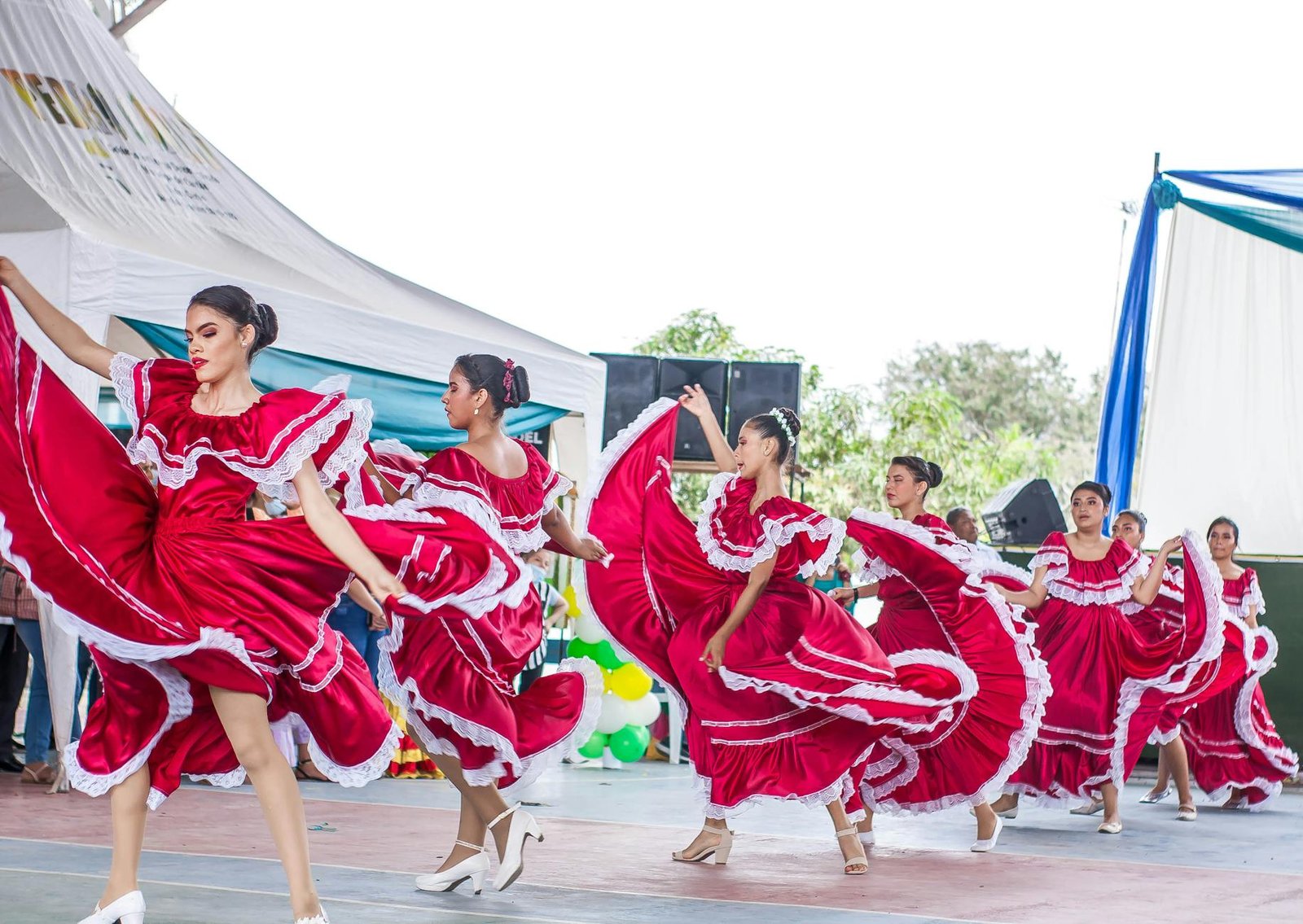
Traditionally, cumbia was danced in a circle around musicians, with women holding candles or lanterns as a symbol of femininity and light. The flowing skirts worn by female dancers weren’t just decorative — they were tools for communication, used to gesture, flirt, and tell a story through movement.
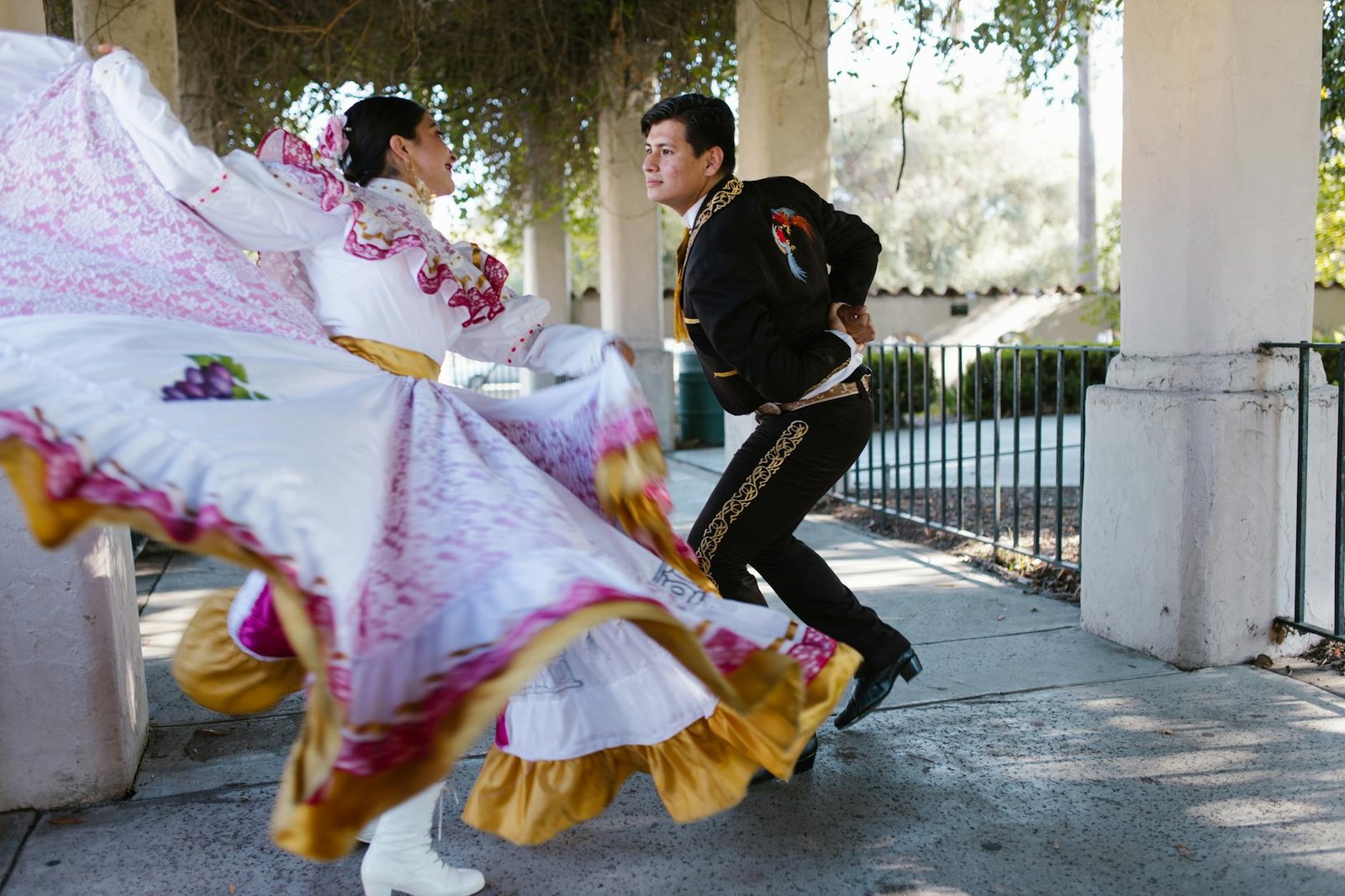
By the 20th century, cumbia had spread throughout Latin America and evolved into distinct regional styles. Colombian cumbia stays closest to tradition, while Mexican cumbia is faster, more upbeat, and emphasizes footwork. Peruvian cumbia (chicha) blends in psychedelic guitar influences. Each version is worth exploring once you have the basics down.
Understanding the Cumbia Rhythm and Music
Before your feet can learn the steps, your ears need to understand the beat. Cumbia is written in 4/4 time, typically at a moderate tempo (around 90–120 BPM). The rhythm is driven by percussion instruments including:
- The tambora — a double-headed drum providing the bass pulse
- The llamador — a smaller drum that locks in the rhythmic pattern
- Maracas and guacharaca — adding texture and syncopation
The key to feeling cumbia is identifying the downbeat and noticing how the rhythm seems to push and pull slightly — it has a gentle “bounce” that should translate directly into your body. Spend a few sessions just listening before you start moving. Artists like Carlos Vives, Sonora Dinamita, and Los Corraleros de Majagual are fantastic entry points for training your ear.
Create a cumbia playlist on Spotify and listen while doing other activities. By the time you start practicing steps, the rhythm will already feel natural.
Cumbia Basic Steps: A Step-by-Step Breakdown
The good news about cumbia is that the foundational steps are beginner-friendly. Here’s how to start:
The Basic Cumbia Step (Paso Básico)
Start with your feet together. The weight transfer and subtle hip motion are what give cumbia its signature feel.
- Count 1: Step your left foot to the left (small step)
- Count 2: Bring your right foot to meet the left (weight transfers)
- Count 3: Step your right foot to the right
- Count 4: Bring your left foot to meet the right
Practice this lateral movement slowly and allow your hips to naturally respond to each weight transfer. Do not force the hip movement — in cumbia, hips follow the feet organically.
The Cumbia Bounce
Cumbia has a characteristic slight knee bend and gentle bounce on each step. Keep your knees soft (never locked) and let your body absorb the rhythm from the ground up. Think of it as a relaxed, flowing quality — not stiff, not exaggerated.
Adding Footwork (Repique)
Once the basic side-to-side step feels natural, you can add a subtle toe-tap or heel-step variation. On count 4, instead of simply bringing your foot together, lightly tap the ball of your foot before transferring weight. This small detail instantly makes your cumbia look more authentic and polished.
Partner Connection
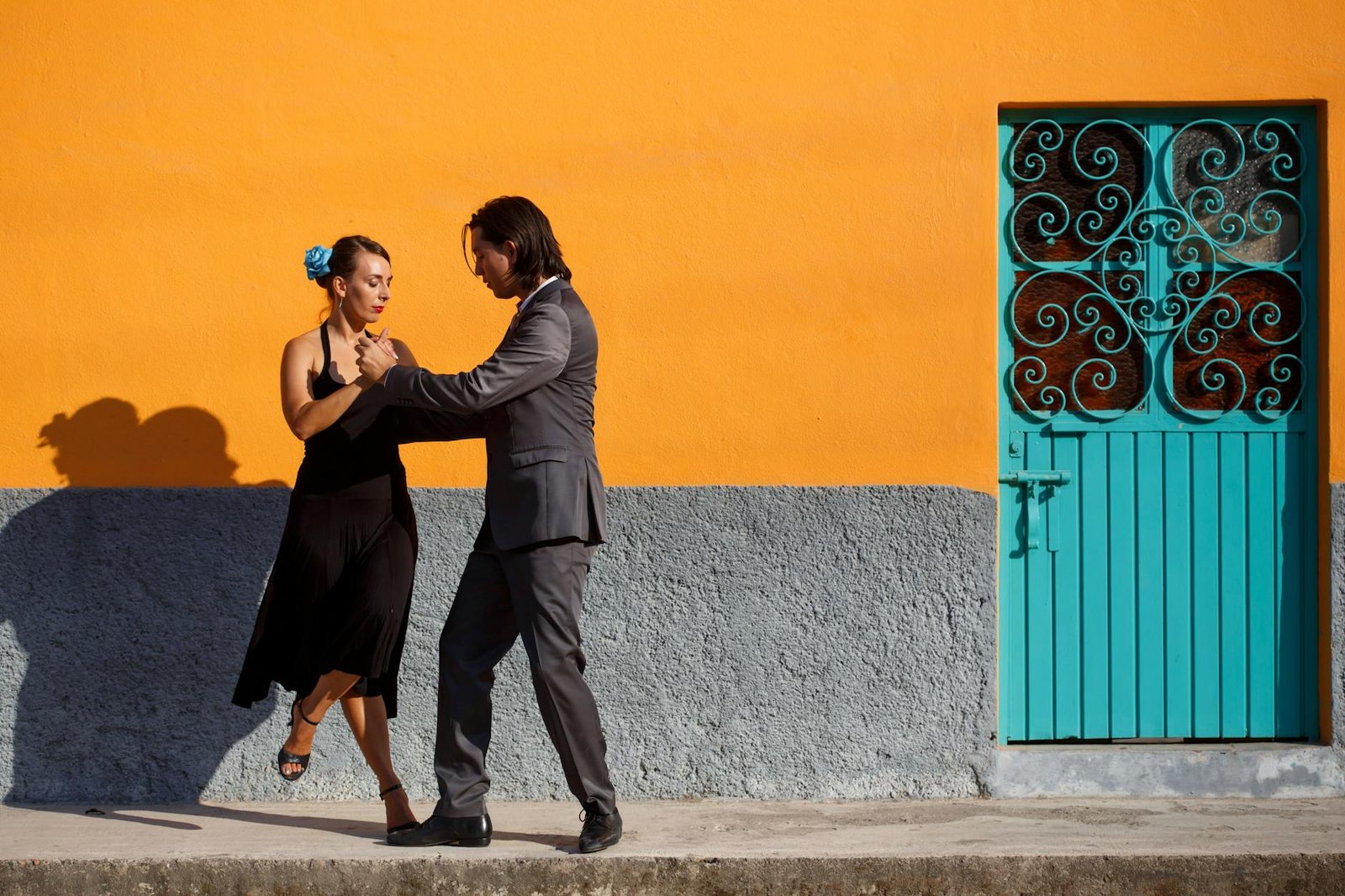
In partnered cumbia, the leader (traditionally the man) guides with a light frame. Hold your partner’s hand in an open position or place your right hand gently on their back. The connection should be soft but clear — cumbia partnering is about playful communication, not rigid control.
Common Mistakes Beginners Make (And How to Fix Them)
Learning any new dance comes with a learning curve. Here are the most common cumbia mistakes and how to correct them:
- Stiff upper body: Cumbia requires a relaxed, natural torso. Drop your shoulders, soften your arms, and let your upper body breathe with the music.
- Over-exaggerating hips: Many beginners try too hard to move their hips. Let the hip motion be a result of correct footwork and weight transfer, not a performance in itself.
- Rushing the rhythm: Cumbia has a laid-back groove. If you’re rushing, slow down and reconnect with the percussion underneath the melody.
- Looking at your feet: Once you have the basic step, lift your gaze. Eye contact and expression are a huge part of cumbia’s charm.
- Taking steps that are too big: Keep your steps small and controlled. Cumbia is a compact, grounded dance — it travels but doesn’t lunge.
The Best Ways to Learn Cumbia Dance
There has never been a better time to learn cumbia. Here are the most effective methods depending on your learning style:
Take In-Person Classes
Nothing replaces live instruction. Search for Latin dance studios in your area that offer cumbia or Colombian dance classes. Many salsa schools also incorporate cumbia into their curriculum. In-person classes give you real-time feedback, a partner to practice with, and the energy of a dance community.
Use Online Video Courses
Platforms like YouTube have excellent free cumbia tutorials. Channels like DancePapi and Latin Dance Community offer structured breakdowns for beginners. For more structured learning, platforms like Udemy occasionally offer Latin dance courses that include cumbia modules at affordable prices.
Practice at Home With the Right Gear
You don’t need a professional studio to practice. A small clear space in your living room works perfectly. A few things that make home practice better:
- Dance shoes: Leather or suede-soled shoes allow smooth pivots and weight transfers. On Amazon, brands like Capezio and Bloch offer affordable beginner Latin dance shoes that improve both comfort and technique significantly.
- A portable Bluetooth speaker: Being able to play music loudly and clearly helps you internalize the rhythm. The JBL Clip 4 or Anker Soundcore 3 (both available on Amazon) are compact and deliver great sound quality for practice sessions.
- A full-length mirror: Watching your own movement is invaluable. Even a freestanding mirror from Amazon helps you self-correct in real time.
Go Social Dancing
Once you have the basics, get out and dance! Look for Latin nights at local clubs, community festivals, or dance socials. Nothing accelerates your learning like social dancing with different partners. Embrace the mistakes — they’re part of the process.
Why Cumbia Is Perfect for All Skill Levels
One of cumbia’s greatest gifts is its scalability. The basic step is simple enough for a complete beginner to grasp in a single session, yet the depth of musicality, footwork variations, and partner dynamics can keep an advanced dancer engaged for a lifetime. It’s a social dance that welcomes everyone — regardless of age, body type, or prior dance experience.
Cumbia also has genuine health and wellness benefits. Regular dancing improves cardiovascular health, coordination, balance, and even mood. Studies have shown that social dancing reduces stress and builds community — and cumbia, with its infectious joy, delivers all of that in abundance.
Start Your Cumbia Journey Today
Cumbia’s rich Afro-Colombian heritage, irresistible rhythm, and welcoming spirit make it one of the most rewarding dances you can add to your skill set. You now have a solid understanding of cumbia dance basics, its steps, history, and the best ways to learn — so the only thing left is to move.
Here’s your action plan:
- Build a cumbia playlist and listen for a week
- Practice the basic lateral step for 15 minutes daily
- Watch two or three beginner tutorials on YouTube
- Find a local class or social dance night near you
- Grab a pair of proper dance shoes to support your practice
The dance floor is waiting. Put on some Sonora Dinamita, feel that tambora pulse, and take your first cumbia step today. Share this guide with a friend who loves to dance — because cumbia is always better when you have a partner!