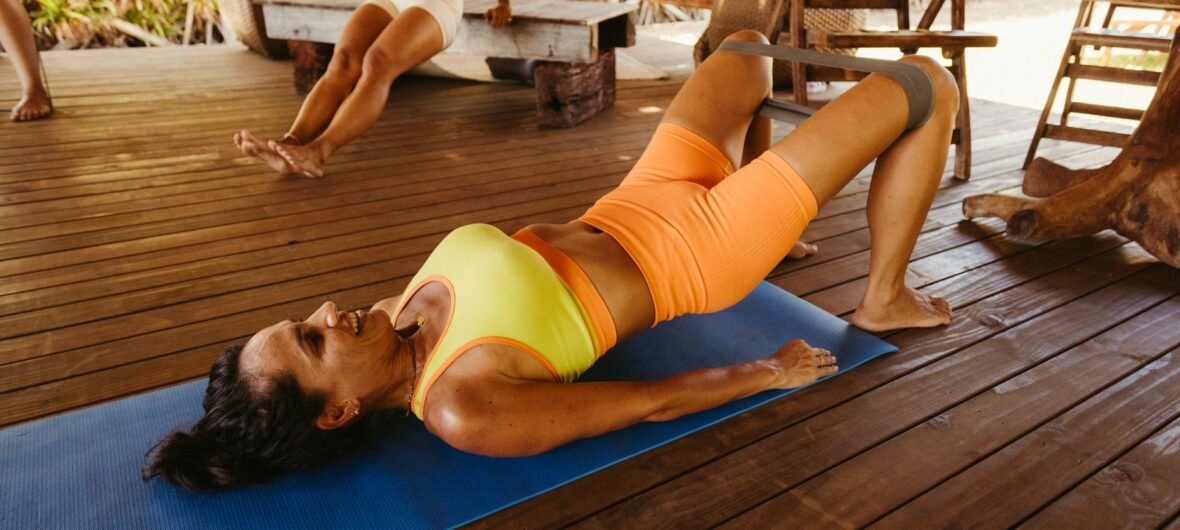
Resistance loop bands — small, continuous loops of elastic resistance material that have become a ubiquitous conditioning tool across athletic disciplines in the past decade — have found specific and increasingly well-supported application in dance conditioning and injury prevention programs. Unlike the longer resistance bands used for full-range stretching assistance (which were the subject of a separate review in our series), loop bands are specifically designed for the multi-directional hip and glute strengthening exercises that address the specific muscular imbalances most common in the dance population. The hip abductors, hip external rotators, and gluteal muscles — the muscle groups that stabilize the hip in the turned-out positions, single-leg balance postures, and landing mechanics of ballet, contemporary, and all partner dance forms — are frequently undertrained in dancers who emphasize the flexibility, aesthetics, and cardiovascular demands of dance training while neglecting the strength training that these muscles specifically require. The gluteus medius in particular — the deep gluteal muscle that stabilizes the pelvis during single-leg standing and controls the leg’s path through the air during landing — is consistently identified in dance medicine research as undertrained in the dance population, contributing to the knee tracking problems, hip impingement patterns, and landing mechanics issues that are common in high-volume dance training. Loop band exercises that specifically load the hip abductors (resistance clamshells, side-stepping with loop band, lateral band walks) and the hip external rotators (monster walks, banded standing exercises) provide the targeted strengthening that these muscles require in a format that is inexpensive, portable, and appropriate for home, studio, and backstage use. The loop band’s resistance level is determined by the band’s material thickness and elastic composition — understanding the appropriate resistance level for the specific exercise and fitness level is essential to using loop bands effectively and safely for dance conditioning.
This guide reviews seven of the best resistance loop bands for dance conditioning and hip strength, evaluating resistance levels, material quality, and dance-specific utility.
Quick Comparison: Best Resistance Loop Bands for Dance Conditioning and Hip Strength (2026)
| Product | Category | Rating | Best For | Price |
|---|---|---|---|---|
| Fabric Resistance Loop Bands Set Hip Circle Band Dance Conditioning | Best Overall | ⭐ 4.8/5 | Dancers who want fabric loop bands for glute and hip conditioning exercises | Check Price |
| Latex Resistance Loop Bands Set 5 Levels Exercise Band Set Glute | Best Latex Set | ⭐ 4.7/5 | Dancers who want an affordable multi-level resistance band set for home conditioning | Check Price |
| Heavy Duty Loop Band Set for Advanced Strength Training Dance Athlete | Best Heavy Duty | ⭐ 4.6/5 | Advanced dancers and pre-professional students who need high resistance bands for hip strengthening | Check Price |
| Mini Loop Bands Booty Band Set Home Dance Workout Leg Circle Band | Best Mini Loop | ⭐ 4.5/5 | Dancers who want a compact, portable band specifically for glute activation exercises | Check Price |
| Dance Conditioning Band Hip Flexor Hip Circle Dancer Exercise | Best Dance-Specific | ⭐ 4.6/5 | Dancers who want a loop band with a guide specifically for dance conditioning exercises | Check Price |
| Recovery Band Light Resistance Rehabilitation Loop Band Hip Ankle | Best Rehabilitation | ⭐ 4.5/5 | Dancers in rehabilitation from hip or knee injuries who need very light resistance for initial strength work | Check Price |
| Budget Resistance Loop Band Pack Affordable Dance Exercise Band | Best Budget | ⭐ 4.0/5 | Beginning dancers who want affordable loop bands for initial conditioning exploration | Check Price |
Detailed Reviews
1. Fabric Resistance Loop Bands Set Hip Circle Band Dance Conditioning
Best for: Dancers who want fabric loop bands for glute and hip conditioning exercises | ⭐ 4.8/5
Fabric resistance loop bands — with a woven or fabric construction rather than plain latex or rubber — are widely preferred for dance conditioning because they do not roll up on the thigh during exercises, do not pinch the skin under load, and maintain their position during multi-directional hip exercises that pure latex bands tend to slide through. Quality fabric loop bands incorporate elastic threads within the fabric weave to provide the resistance, with an outer fabric layer that contacts the skin comfortably without the sticky or pinching quality of rubber bands.
Pros
- ✓ Fabric construction does not roll up on the thighs during banded exercises
- ✓ Does not pinch or irritate the skin under tension unlike latex alternatives
- ✓ Multiple resistance levels in a set allow progressive loading as strength develops
Cons
- ✗ Fabric loop bands are typically more expensive than latex alternatives
- ✗ Fabric construction may stretch permanently under very heavy resistance if the elastic threads are overloaded — use the appropriate resistance level for the exercise
2. Latex Resistance Loop Bands Set 5 Levels Exercise Band Set Glute
Best for: Dancers who want an affordable multi-level resistance band set for home conditioning | ⭐ 4.7/5
Multi-level latex loop band sets — providing 4-6 bands in graduated resistance levels from light to heavy — allow the dancer to select the appropriate resistance for each specific exercise and to progress resistance levels as the targeted muscles strengthen over weeks of consistent training. Latex bands are the most affordable option and provide consistent resistance across the full range of loop sizes.
Pros
- ✓ Multi-level set covers all resistance needs from rehabilitation-level light to challenging strength training
- ✓ Latex material provides consistent resistance across the full range of the loop’s circumference
- ✓ Most affordable option — accessible to dancers at any budget level
Cons
- ✗ Latex bands roll up on the thigh during exercises that require band movement along the skin — a common frustration during lateral band walks
- ✗ Latex may cause reactions in dancers with latex sensitivity — verify before use
3. Heavy Duty Loop Band Set for Advanced Strength Training Dance Athlete
Best for: Advanced dancers and pre-professional students who need high resistance bands for hip strengthening | ⭐ 4.6/5
Heavy-duty loop bands in the heavy-to-extra-heavy resistance range — providing meaningful loading for the hip abductors, external rotators, and gluteal muscles of dancers who have progressed past the light resistance appropriate for beginning band work — allow progressive overload that is essential for continued strength development. Advanced dancers often underestimate how much resistance is needed to genuinely challenge the hip muscles; bands that feel challenging initially may become inadequate within weeks of consistent training.
Pros
- ✓ Heavy resistance provides genuine strength training loading for the hip muscles — not just activation exercises
- ✓ Supports progressive overload over weeks and months of consistent training
- ✓ Appropriate for the advanced dance athlete who has outgrown light resistance bands
Cons
- ✗ Heavy resistance can encourage compensatory patterns in the lumbar spine and hip flexors if form is not carefully maintained — begin with lighter resistance and progress gradually
- ✗ Heavy bands in a small loop format have less stretch range than longer resistance bands — verify that the band’s circumference accommodates the specific exercise’s movement range
4. Mini Loop Bands Booty Band Set Home Dance Workout Leg Circle Band
Best for: Dancers who want a compact, portable band specifically for glute activation exercises | ⭐ 4.5/5
Mini loop bands — smaller-circumference loop bands specifically sized for use around the thighs (just above the knee) rather than at the ankles — are sized to provide the optimal resistance vector for clamshell exercises, side-lying hip abduction, and seated hip external rotation exercises that are among the most targeted hip strengthening exercises for dancers. The positioning just above the knee applies the resistance at the mechanical advantage point for the hip muscles.
Pros
- ✓ Sized specifically for the most effective positioning for hip-targeted exercises
- ✓ Compact and portable for home, studio, and travel use
- ✓ The above-knee position is comfortable for extended exercise sets without the ankle-band discomfort that some dancers experience
Cons
- ✗ The smaller circumference means limited use for ankle-positioned exercises — two different band sizes may be needed for a complete exercise program
- ✗ Some mini band circumferences are too tight for wider-thighed individuals — verify the circumference against the specific body measurement
5. Dance Conditioning Band Hip Flexor Hip Circle Dancer Exercise
Best for: Dancers who want a loop band with a guide specifically for dance conditioning exercises | ⭐ 4.6/5
Dance-specific loop band sets — marketed toward dancers with included exercise guidance targeting the specific hip and glute muscles most relevant to dance injury prevention — provide the appropriate band alongside instructional content that helps dancers use the bands effectively for their specific conditioning needs. The included exercise program distinguishes these sets from generic athletic conditioning bands.
Pros
- ✓ Included dance-specific exercise guidance helps dancers use the bands effectively for their specific needs
- ✓ Resistance level appropriate for typical beginning-to-intermediate dance conditioning program
- ✓ Targeted toward the specific muscle imbalances common in the dance population
Cons
- ✗ The included exercise guidance may be less detailed or evidence-based than guidance from a qualified physiotherapist — consult a dance medicine specialist for a personalized program if specific injuries or imbalances are present
- ✗ Dance-specific marketing may come at a slight price premium over equivalent generic bands
6. Recovery Band Light Resistance Rehabilitation Loop Band Hip Ankle
Best for: Dancers in rehabilitation from hip or knee injuries who need very light resistance for initial strength work | ⭐ 4.5/5
Light resistance rehabilitation loop bands — at the very lowest resistance levels appropriate for injury rehabilitation contexts where even gentle loading of healing tissue is the goal — serve dancers in the early stages of hip, knee, or Achilles rehabilitation where standard light resistance bands are still too challenging. Quality rehabilitation-level bands provide a consistent, gentle resistance that allows the first stage of muscle re-activation without loading the healing tissue beyond its tolerance.
Pros
- ✓ Very light resistance appropriate for early rehabilitation stage muscle re-activation
- ✓ Consistent resistance maintains proper exercise form without challenging the healing tissue excessively
- ✓ Appropriate for use under the guidance of a physiotherapist in formal rehabilitation program
Cons
- ✗ Rehabilitation-level resistance provides minimal training effect for healthy dancers — not appropriate as a conditioning tool for those without specific injury rehabilitation needs
- ✗ Must be used under the guidance of a healthcare provider in rehabilitation contexts — not a self-directed treatment tool
7. Budget Resistance Loop Band Pack Affordable Dance Exercise Band
Best for: Beginning dancers who want affordable loop bands for initial conditioning exploration | ⭐ 4.0/5
Budget latex loop band packs at the lowest price point provide the basic resistance function for initial hip and glute conditioning exploration at accessible pricing. The material quality and resistance consistency may be less than quality alternatives — bands may lose resistance over time or break earlier than quality alternatives — but adequate for exploring loop band conditioning before investing in quality fabric bands.
Pros
- ✓ Accessible price for initial conditioning exploration
- ✓ Basic resistance function for the most common hip conditioning exercises
- ✓ Multi-pack options available at low per-band cost
Cons
- ✗ Lower material quality — may break or permanently stretch faster than quality alternatives
- ✗ Resistance consistency less precise than quality bands
Buying Guide: What to Look for
Using resistance loop bands effectively for dance conditioning requires understanding exercise selection and progressive loading principles:
- The Key Hip Muscles for Dancers: Loop band exercises are most specifically useful for three muscle groups that are consistently underloaded in typical dance training. Gluteus medius: the primary hip abductor that stabilizes the pelvis during single-leg standing, controls the leg’s path through the air, and resists the internal rotation moment at the knee during jump landings — clamshell exercises, side-lying hip abduction, and lateral band walks target this muscle specifically. Hip external rotators (piriformis, obturator group): the muscles that maintain the turned-out position of the leg and control the hip’s rotation during the stance phase of dance movements — resistance exercises in the turned-out position and standing external rotation with band resistance target these muscles. Gluteus maximus: the large power-generating gluteal muscle important for jump height, single-leg push-off, and hip extension in arabesque — resistance exercises targeting this muscle include banded hip thrusts and banded glute bridges. A balanced program addresses all three groups.
- Specific Exercises for Dance Conditioning: The most evidence-supported loop band exercises for dance. Clamshell (light to medium band, positioned just above the knees): lie on the side with hips flexed to 45 degrees and knees flexed to 90 degrees; maintain the feet together while rotating the top knee upward against the band’s resistance; specifically targets the gluteus medius and hip external rotators. Lateral band walk (medium band at ankles): stand with the band around the ankles and assume a quarter-squat position; step sideways maintaining the squat position; specifically loads the gluteus medius in the weight-bearing position. Monster walk (medium band at ankles): walk forward and diagonally in a quarter-squat position; loads the hip abductors and external rotators in the functional stance position. Single-leg banded balance: stand on one leg with the band around the standing ankle and the free leg in various positions; loads the stance leg’s gluteus medius in the position most relevant to dance single-leg balances.
- Resistance Level Progression: Beginning conditioning: light resistance bands allow initial muscle recruitment pattern learning without creating compensatory patterns from too-heavy resistance. The appropriate resistance allows the exercise to be performed with good technique for 15-20 repetitions — if good technique cannot be maintained for at least 10 repetitions, the band is too heavy. Intermediate progression: as the light resistance becomes easy (15-20 reps with clean technique), progress to the next resistance level. Advanced conditioning: heavy bands with lower repetition ranges (6-10 reps) provide genuine strength training for the hip muscles — this progressive overload is essential for continued adaptation.
- Integration into Dance Training: Loop band conditioning is most effective when integrated consistently into the dance training week rather than done sporadically. Before class (activation): 2-3 sets of 10-12 repetitions of clamshells and lateral band walks before class activates the hip stabilizers for the class work ahead. After class (strengthening): more extended conditioning sets (3 sets of 15-20 reps) of a range of exercises after class when the cardiovascular demands of the class are complete. On rest days (maintenance): a full hip conditioning circuit of 15-20 minutes on rest days provides consistent training stimulus without adding to the in-class training load. Minimum effective dose: two dedicated loop band conditioning sessions per week has been shown to produce meaningful hip strength improvements in dancers over a 6-8 week intervention period.
Frequently Asked Questions
Why do dancers need hip strengthening?
Dance training creates a specific pattern of muscular demand that, when not supplemented with targeted strengthening, produces predictable muscular imbalances. The hip flexors, quadriceps, and the muscles of the inner thigh (adductors) are extensively loaded through the plié, relevé, jump, and turned-out position-holding that makes up the majority of dance class activity. The hip abductors, external rotators, and gluteal muscles — the muscles on the outer and posterior hip — receive comparatively little direct loading from typical dance training despite being critical for the stability, control, and injury prevention that advanced dance technique requires. The result is a pattern where dancers frequently have excellent hip flexibility and some aspects of hip strength but inadequate hip abductor and external rotator strength — a pattern that contributes to knee tracking problems (the knee collapsing inward during single-leg landing), hip impingement (the hip joint loading in a position that the unstabilized hip cannot manage), and the ankle instability that results from inadequate proximal stability at the hip and pelvis.
How often should dancers use resistance bands?
For hip conditioning specifically: most dance medicine practitioners recommend 2-3 dedicated resistance band conditioning sessions per week for meaningful strength development. This frequency allows adequate recovery time between sessions while providing the training stimulus frequency that muscle adaptation requires. For activation before class: a short (5-10 minute) activation routine with lighter bands can be done before every class session without interfering with recovery. Combining both: activation work (light bands for 2-3 sets before class) on every class day, plus two dedicated conditioning sessions per week on different days, provides the most comprehensive program for dancers who want to optimize hip strength. Avoid resistance band conditioning immediately before very high-intensity class work (as pre-fatigue of the stabilizer muscles can temporarily reduce their function during the class), but immediately after class or on rest days is ideal.
Are fabric bands better than latex bands for dance?
For most dance conditioning applications, fabric bands are preferable to latex bands for specific practical reasons. Fabric bands do not roll up the thigh during exercises that involve the band moving along the skin (lateral band walks, monster walks) — this rolling is the most common frustration with latex loop bands and interrupts the exercise to fix constantly. Fabric bands also tend not to pinch the skin under heavy resistance in the way that thin latex bands can. These practical advantages make fabric bands more user-friendly for the exercises most relevant to dance conditioning. The resistance and elastic properties of quality fabric bands are functionally equivalent to quality latex bands. The downsides of fabric — higher cost and potential for the elastic thread to fatigue over time — are real but generally outweighed by the practical comfort advantages for regular use.
Can I use resistance bands to help with splits?
Loop bands can be used to support splits training in specific ways, though they serve a different function from the longer resistance bands used for assisted stretching. One application: wearing a light loop band around the thighs while doing hip flexor and piriformis stretches activates the hip abductors against the band’s resistance, which may increase the release of the opposing hip adductors through reciprocal inhibition — a technique sometimes used in active flexibility training. Another application: holding the band around the front foot during a split stretch allows a gentle assisted pull into the split that some practitioners find helpful. These are supplementary applications rather than the primary use of loop bands in dance — the primary use is hip strengthening, which indirectly supports flexibility by improving the muscular control of the hip positions that splits training requires.
How do I know what resistance level to choose?
The appropriate resistance level is the level at which the target exercise can be performed with correct technique for the intended number of repetitions, with the resistance creating noticeable effort on the last 2-3 repetitions of the set. If the band can be used for 20+ repetitions without noticeable effort, the resistance is too light for strength development (though it may be appropriate for activation before class). If good technique cannot be maintained for at least 8 repetitions, the resistance is too heavy and will create compensatory patterns that defeat the exercise’s purpose. For beginning dancers new to hip conditioning: start with light resistance; for the clamshell exercise, the appropriate resistance is typically one that makes 15 repetitions feel moderately challenging. For intermediate and advanced dancers with hip conditioning experience: a medium-to-heavy band that limits well-executed repetitions to 10-12 is appropriate for the strength phase of conditioning.
Final Verdict
A set of fabric resistance loop bands in 3-4 graduated resistance levels — covering the light-to-heavy range needed for activation work before class, general conditioning, and progressive strength training — provides the most versatile and dance-appropriate tool for the hip and glute conditioning that dance injury prevention research consistently identifies as important for the dance population. Begin with light resistance and prioritize technique precision over resistance level. Two dedicated conditioning sessions per week of 15-20 minutes, focused on clamshells, lateral band walks, and single-leg stabilization exercises, produces meaningful hip strength improvements within 6-8 weeks.