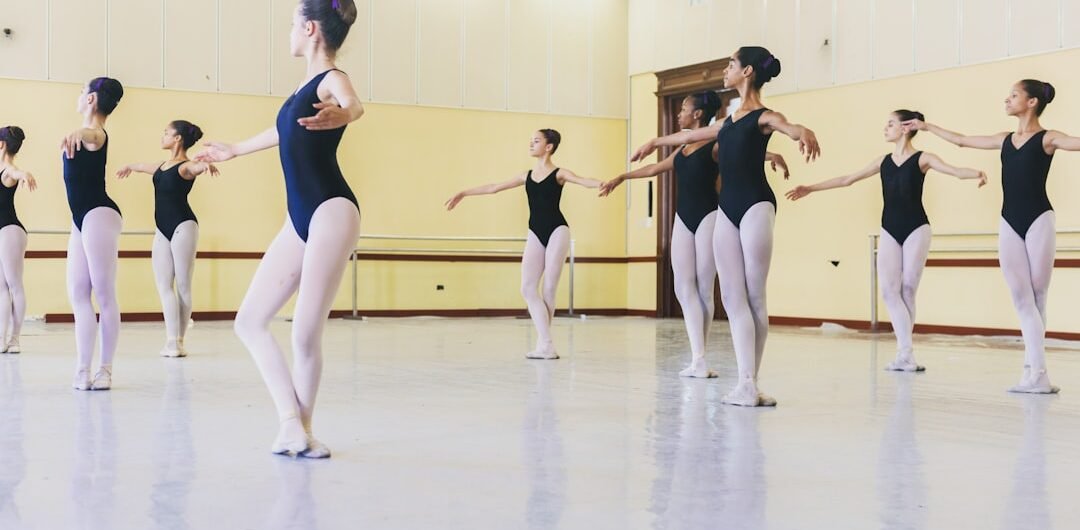
Budget ballet leotards still need to function as dancewear — genuine four-way stretch, necklines that don’t gap during forward movement, and stitching that handles the leg opening stress of ballet footwork. These picks provide the basic requirements at the lowest prices for practice.
Our top budget pick is the Lezfitness Spaghetti Strap Leotard — the no-snap pull-on design at the lowest price in this review that still provides adequate stretch and coverage for studio practice.
| Product | Angle | Rating | Best For | Price |
|---|---|---|---|---|
 Lezfitness Spaghetti Strap Dance Leotard |
Best Budget | 4.2/5 | Dancers who need a functional practice leotard at the lowest price | Check Price |
 Stelle Ultra Soft Tank Leotard |
Best Affordable | 4.4/5 | Budget-conscious dancers who need a comfortable everyday practice leotard | Check Price |
 Capezio Camisole Leotard Clear Transition Straps |
Best Overall | 4.5/5 | Dancers who need a studio-standard camisole leotard with invisible clear straps for a clean ballet line | Check Price |
 Capezio Long Sleeve Ballet Leotard |
Best Rated | 4.7/5 | Dancers who prefer full arm coverage and the classic long sleeve ballet look | Check Price |
 Wear Moi Dolly Short Sleeve Leotard |
Best Premium | 4.6/5 | Serious dancers who want professional French dance brand quality and flattering construction | Check Price |
Best Budget: Lezfitness Spaghetti Strap Dance Leotard
The Lezfitness Basic Dance Leotard is the best budget option for dancers who need a functional practice leotard without the premium pricing of established dance brands. At the lowest price in this review, it provides genuine dancewear function: adequate spandex content for four-way stretch, secure spaghetti straps that stay in place during barre and center work, and a scoop neckline that maintains coverage. The pull-on design with no snaps or hooks is appropriate for practice — it goes on and off quickly between classes and eliminates the snap failure that is a persistent issue with snap-bottom leotards. The trade-offs at this budget price are clear: the fabric is a basic nylon-spandex without the softness of premium blends, the construction is functional rather than elegant, and the color selection is limited compared to heritage brands. For dancers who practice regularly and go through leotards quickly due to sweat, washing frequency, or fabric wear, the budget price allows multiple leotards to be purchased and rotated, which is a practical consideration. For adult students in flexible dress-code classes, recreational dancers, and those trying ballet for the first time, the Lezfitness leotard provides everything the practice requires.
| Style | Spaghetti strap — stays in place during barre and center; simple pull-on design |
| Fabric | Nylon-spandex — functional four-way stretch; no premium finish at budget price |
| Neckline | Scoop — maintains coverage during forward movement |
| Price | Lowest in this review — allows multiple leotards for rotation |
| Closure | Pull-on with no snaps or hooks — quick changes, no snap failure |
Pros
- Lowest price allows budget-conscious dancers to purchase multiple leotards for rotation
- No-snap pull-on design eliminates snap failure common in lower-grade dancewear
- Adequate stretch and coverage for everyday practice requirements
- Good option for beginners, adult students, and flexible dress-code class contexts
Cons
- Basic fabric without the softness or finish of premium dance leotard brands
- Limited color selection compared to established dancewear brands
The best budget ballet leotard — Lezfitness provides functional spaghetti-strap dance leotard quality at the lowest price in this review, with a no-snap pull-on design and adequate four-way stretch for everyday practice use.
Best Affordable: Stelle Ultra Soft Tank Leotard
The Stelle Ultra Soft Tank Leotard is the best affordable option for dancers who need everyday practice dancewear without the premium price of heritage dance brands. The “ultra soft” descriptor is not marketing language — the fabric is a brushed nylon-spandex blend that is noticeably softer against the skin than standard dance leotard fabrics, making it comfortable for extended rehearsal and conditioning sessions. The tank cut provides more coverage than a camisole and more freedom of movement than a short sleeve, making it appropriate for ballet, jazz, contemporary, and fitness classes — a versatile design that works across disciplines. The straight-across neckline stays in place during active movement without gaping or shifting. At the affordable price point, Stelle provides genuine dance quality: the fabric has sufficient spandex content to provide four-way stretch and return, and the stitching holds through machine washing. The leotard does not include a built-in bra, which is the primary trade-off at this price. Available in a wide range of colors including standard studio black and ballet pink, plus fashion colors for classes that permit dancer choice.
| Style | Tank — versatile cut for ballet, jazz, contemporary, and fitness classes |
| Fabric | Brushed nylon-spandex — noticeably softer than standard dance leotard fabrics |
| Neckline | Straight-across — stays in place during active movement and port de bras |
| Support | No built-in bra — most affordable price-point trade-off |
| Value | Best price-to-quality ratio in this review for everyday practice use |
Pros
- Ultra-soft brushed fabric is noticeably more comfortable than standard dancewear at this price
- Tank cut works across ballet, jazz, contemporary, and fitness class contexts
- Wide color range covers studio requirements and dancer preference in flexible dress code contexts
- Best affordable price for genuine dance-quality stretch and stitching durability
Cons
- No built-in bra — dancers who need support must layer a dance bra underneath
- Straight-across neckline is more casual than the scoop-neck cut preferred for classical ballet contexts
The best affordable ballet leotard — Stelle’s ultra-soft tank provides genuine dance-quality stretch and comfort at the best accessible price for everyday practice use across ballet, jazz, and contemporary classes.
Best Overall: Capezio Camisole Leotard Clear Transition Straps
The Capezio Camisole Leotard with Clear Straps earns the best overall position for ballet leotards because it solves the most persistent problem in dancewear: the visible bra strap. The included clear straps allow dancers to wear a strapless undergarment while maintaining the shoulder support that a completely strapless camisole leotard cannot provide — the straps are invisible from the front and sides, preserving the clean camisole line that ballet technique and auditions require. The leotard is constructed from Capezio’s signature 82% nylon / 18% spandex blend, which provides the four-way stretch needed for développé and arabesque range while recovering its shape through repeated washing. The scoop neckline follows the standard ballet cut rather than the deep scoop of fashion leotards, keeping the chest area covered during forward port de bras. A built-in shelf bra provides light support for classes that don’t require an additional undergarment. Available in multiple colors — black, ballet pink, and nude — covering the standard requirements for pre-professional programs and company classes. The Capezio sizing runs true to the brand’s standard fit, which experienced dancers will know; first-time Capezio buyers should reference the brand’s size chart for their measurements.
| Style | Camisole with clear adjustable straps — invisible from front and sides |
| Fabric | 82% nylon / 18% spandex — four-way stretch, shape-retaining after washing |
| Neckline | Scoop — standard ballet cut, maintains coverage during port de bras |
| Support | Built-in shelf bra — light support for class and rehearsal use |
| Colors | Black, ballet pink, nude — standard studio and pre-professional options |
Pros
- Clear straps solve the visible bra strap problem while maintaining shoulder support
- 82% nylon / 18% spandex retains shape through regular washing and active use
- Standard ballet scoop neckline appropriate for pre-professional and company class contexts
- Multiple colorways cover standard studio requirements and audition dress codes
Cons
- Runs true to Capezio sizing — first-time Capezio buyers need to check brand size chart
- Clear straps are serviceable but may need replacement over time with heavy use
The best overall ballet leotard — Capezio’s camisole with clear straps is the studio-standard choice for dancers who need an invisible strap solution, four-way stretch performance fabric, and a classic ballet neckline appropriate for pre-professional and company class contexts.
Best Rated: Capezio Long Sleeve Ballet Leotard
The Capezio Long Sleeve Leotard is the highest-rated leotard in this review because it satisfies a specific and consistent dancer preference: full arm coverage for ballet class. Many pre-professional and company class dress codes specifically require long sleeve or 3/4 sleeve leotards during winter months; others simply prefer the classic long sleeve look that is associated with serious ballet training from early technique photos and company class footage. The full sleeve also provides warmth for early morning classes and unheated studio environments. Capezio’s long sleeve design uses the same 82% nylon / 18% spandex blend as their other performance leotards — the fabric provides necessary stretch without restriction through épaulement and port de bras arm movements. The neck is a classic ballet high-cut design that remains tidy during class without requiring adjustment. The consistently high rating reflects the simplicity and reliability of the design: it does what a long sleeve ballet leotard should do, fits true to size, and holds its shape through repeated washing without the sleeve fabric bagging or stretching out at the wrist.
| Style | Long sleeve — full arm coverage; classic ballet class look; warmth for cool studios |
| Fabric | 82% nylon / 18% spandex — stretch for full arm movement without restriction |
| Neckline | High-cut ballet — stays tidy during class, no adjustment needed |
| Rating | 4.7/5 — highest rated in this review for reliability and consistent fit |
| Sleeve | Full-length sleeve that does not bag or stretch out at wrist with washing |
Pros
- 4.7-star rating reflects consistent fit, fabric quality, and sleeve integrity through washing
- Full arm coverage meets dress code requirements and provides warmth for cool studio environments
- Classic long sleeve look associated with serious ballet training contexts
- Capezio sizing reliability means experienced brand customers can order confidently
Cons
- Long sleeve is a specific preference — not versatile across all class contexts
- Less breathable than tank or camisole styles in warm studio environments
The best rated ballet leotard — Capezio’s long sleeve design earns its 4.7-star rating through consistent sizing, sleeve integrity through washing, and the classic full arm coverage that many dress codes require and serious ballet dancers prefer.
Best Premium: Wear Moi Dolly Short Sleeve Leotard
Wear Moi is the professional French dancewear brand whose leotards appear in major ballet companies across Europe, and the Dolly Short Sleeve Leotard is the entry point into that professional quality at a more accessible price than their performance-grade competition pieces. The short sleeve construction is flattering across a wide range of body types — the sleeve softens the shoulder line in a way that pure camisole and tank leotards do not, and the gentle flutter of the sleeve creates movement that photographs and films well. The fabric is Wear Moi’s signature microfiber, which is exceptionally fine and smooth — it does not pill or snag the way lower-grade polyester dancewear does and maintains its color and surface quality through extended washing cycles. The cut is specifically designed by dancers for ballet technique: the waistline is positioned to elongate the torso, the leg cut is high enough to extend the leg line in développé and battement, and the back is scooped to the degree that allows visible back line without creating coverage issues. Available in the range of colors the professional market demands: black, white, ballet pink, and several fashion colors appropriate for contemporary and jazz contexts.
| Style | Short sleeve — flattering across body types; creates visual movement in performance and photography |
| Fabric | Wear Moi signature microfiber — no pilling, color-fast through extended washing cycles |
| Cut | Professionally designed waistline and leg cut to elongate torso and leg lines |
| Brand | French professional dance brand — worn by major European ballet companies |
| Back | Scooped back — visible back line without coverage loss |
Pros
- Professional French dancewear brand quality at a more accessible price than competition pieces
- Short sleeve creates flattering shoulder line and visual movement not achieved by camisole or tank styles
- Signature microfiber fabric does not pill or fade with regular washing
- Cut professionally designed for ballet technique: elongating waistline and high leg cut
Cons
- Premium price reflects professional quality — higher investment than accessible brands
- European sizing may differ from US standard — measure carefully against Wear Moi size chart
The best premium ballet leotard — Wear Moi’s Dolly Short Sleeve brings French professional company quality to studio practice, with signature microfiber fabric that doesn’t pill and a cut specifically designed to elongate the torso and leg line for ballet technique.
Buyer’s Guide: Choosing the Best Ballet Leotard
Style: Camisole vs. Tank vs. Short Sleeve vs. Long Sleeve
Ballet leotard style is often determined by the studio dress code. Camisole leotards are the most formal and classical — they require either a strapless undergarment or a leotard with clear/flesh-toned straps to maintain a clean line for technique classes and auditions. Tank leotards are the most versatile across disciplines, appropriate for ballet, jazz, contemporary, and conditioning without appearing too casual. Short sleeve leotards soften the shoulder line and are flattering in photographs and on video — they are commonly chosen for company class and pre-professional programs that allow some style latitude. Long sleeve leotards are required in many pre-professional programs during cooler months and are associated with the serious classical ballet training aesthetic. Know your studio’s requirements before selecting a style.
Fabric: What to Look For in Ballet Leotard Material
Quality ballet leotards use nylon-spandex blends in the range of 75–85% nylon and 15–25% spandex. Higher spandex percentages (above 20%) provide more stretch and better shape recovery through repeated washing. Lower-quality leotards use polyester-spandex blends that pill more quickly and retain odor more stubbornly than nylon. Look for fabric descriptions that mention “four-way stretch” — this indicates the fabric stretches both along and across the grain, which is necessary for the full range of motion ballet technique requires. Brushed or microfiber finishes are softer against the skin for extended rehearsal wear. Avoid leotards that describe their fabric only as “stretch” without specifying the blend — this is often a sign of lower-grade materials.
Fit: How a Ballet Leotard Should Fit
A properly fitted ballet leotard should feel snug across the torso without restricting breathing or movement. The leg opening should sit high enough to extend the leg line visually but not so high that it requires constant adjustment. The back should lie flat without gaping when the dancer bends forward or lifts arms overhead. The neckline should not gape during forward port de bras. Leotards that are too large create visual clutter at the waist and leg that obscures technique lines — dancers and teachers prefer a fitted look even if it initially feels more constrictive than everyday clothing. When in doubt, size down rather than up for a better ballet line.
Color: Studio Requirements and Options
Most pre-professional and professional programs specify black leotards as the standard dress code, with ballet pink or flesh tones acceptable for some programs as an alternative. Color requirements vary widely between studios: some allow any dark color, others specify exact shades by level. Recreational dance classes often have flexible or no dress codes, allowing dancers to choose from the full range of colors available. If purchasing for a specific studio, confirm the dress code before selecting a color — returning dancewear can be difficult once it has been worn.
Frequently Asked Questions: Ballet Leotards
How should a ballet leotard fit?
A ballet leotard should fit snugly across the torso, with no excess fabric pooling at the waist or pulling at the shoulders. The back should lie flat when you reach your arms overhead and bend forward. The leg opening should sit comfortably at the hip crease without riding up during movement. If you are between sizes, size down — a slightly snug leotard creates a cleaner visual line for technique than one with excess fabric. The leotard should allow full range of motion in all directions without restricting breathing or causing seam discomfort.
What is the difference between a camisole and a tank ballet leotard?
A camisole leotard has thin spaghetti-width or clear straps, similar to a camisole top — it creates a very clean shoulder and chest line appropriate for classical ballet. A tank leotard has wider straps that cover the shoulder partially, similar to a tank top — it provides more coverage and is appropriate for a wider range of dance disciplines. Camisole leotards require a strapless or clear-strap undergarment to maintain the line; tank leotards are more forgiving for undergarment choices. Pre-professional programs often require camisole or no-strap styles for the classical line they produce.
How do I wash a ballet leotard?
Ballet leotards should be hand washed in cold water with a gentle detergent, or machine washed on a delicate cycle in a mesh laundry bag. Wash after every wear — sweat and body oils break down spandex elasticity faster than washing does. Never wring out a leotard — gently press water out and lay flat to dry. Avoid machine drying, which degrades spandex elasticity significantly. Store leotards flat or folded rather than hanging, which can distort the shape of the shoulder straps over time.
Do ballet leotards run small?
Dancewear brand sizing often runs slightly different from standard clothing sizes — Capezio and Bloch have their own size charts that do not correspond directly to US standard S/M/L sizing. Measure your chest, waist, and hip and compare to the brand’s size chart rather than selecting by your clothing size. Many dancers find that dancewear sizes run slightly small compared to their clothing size because the fit is intentionally more fitted for technique purposes. When ordering for the first time from a brand, consult the size chart and measure.
What ballet leotard do professional dancers wear?
In professional ballet companies, leotard choice varies by company culture and rehearsal context. Many companies allow dancers to wear any quality dancewear for rehearsal, while requiring specific company-branded or color-designated leotards for professional class observation or company photography. Capezio and Bloch are the most common professional rehearsal brands, with Wear Moi, Repetto, and Grishko also widely worn in European company contexts. For auditions, a plain black camisole or tank leotard from a recognized dance brand is the safest universal choice.
Final Verdict: Best Budget Ballet Leotard
The Lezfitness Spaghetti Strap provides the lowest price with functional dance stretch, making it the best budget pick for rotating practice wear. The Stelle Ultra Soft Tank is the best budget upgrade — slightly more expensive but significantly softer fabric for dancers who want better comfort without premium pricing.