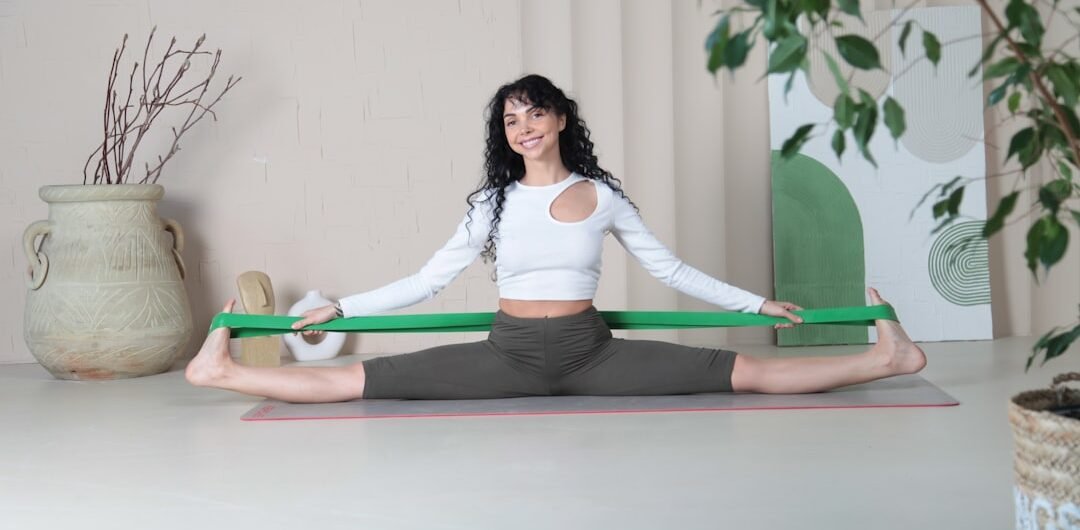
Resistance bands are one of the most versatile and portable conditioning tools available to dancers — they can train hip abductors and glutes during movement, condition foot pointing and ankle strength, and assist flexibility training without requiring any equipment larger than a dance bag. The right resistance band for a dancer depends on whether the primary goal is leg conditioning during movement, foot and ankle strengthening, or assisted stretching progression.
Our top overall pick is the Kinetic Bands Dance Leg Resistance Kit — the only product in this review designed from the ground up for dance-specific leg and hip conditioning, worn during practice for movement-pattern resistance training. Below is the full comparison.
Here’s a quick look at our top picks for dancers.
| Product | Angle | Rating | Link |
|---|---|---|---|
 Kinetic Bands Dance Leg Resistance Kit Kinetic Bands Dance Leg Resistance Kit |
Best Overall | 4.4/5 | View on Amazon |
 THERABAND Stretch Strap with Loops THERABAND Stretch Strap with Loops |
Best Premium | 4.5/5 | View on Amazon |
 Zenmarkt Ballet Stretch Bands Zenmarkt Ballet Stretch Bands |
Best Rated | 4.5/5 | View on Amazon |
 Fit Simplify Ballet Stretch Bands Fit Simplify Ballet Stretch Bands |
Best Affordable | 4.6/5 | View on Amazon |
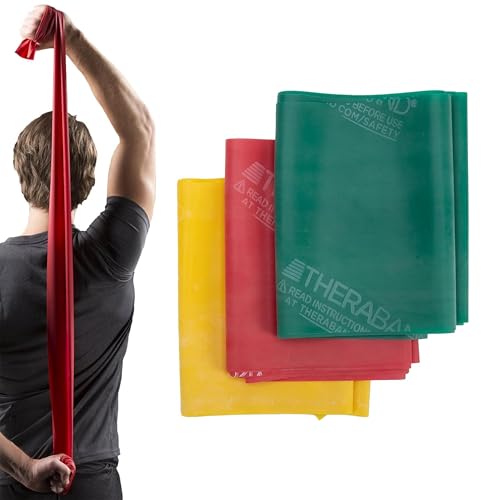 THERABAND Resistance Bands Beginner Set THERABAND Resistance Bands Beginner Set |
Best Budget | 4.6/5 | View on Amazon |
Best Overall: Kinetic Bands Dance Leg Resistance Kit
Best for: Dancers who want leg-specific resistance conditioning and a flexibility strap in a single dance-designed kit
The Kinetic Bands Dance Leg Resistance Bands are the best overall pick for dancers specifically because they are designed from the ground up for dance conditioning rather than being repurposed gym equipment. The bands are worn just above the knees during movement practice — tendu sequences, arabesques, grand battements — creating constant resistance that fires the hip abductors, hip flexors, and glutes through the full range of dance-specific movement patterns. This targeted approach trains the muscles that actually control dance technique far more efficiently than seated gym machine exercises that work the same muscles but through ranges irrelevant to dance. The kit includes a flexibility strap for static hamstring, hip flexor, and quad stretching after conditioning work, and the digital training download includes dance-specific exercises developed for the kit. Having leg resistance and flexibility tools in a single purchase reduces the setup needed for a complete dancer conditioning routine. The resistance levels are designed for dancers rather than powerlifters — the tension is sufficient to challenge active movement without preventing good technique, which is the key calibration issue with general-purpose resistance bands used in dance settings.
Specifications
| Design | Worn above knees — applies resistance during dance-specific movement patterns |
| Training focus | Hip abductors, hip flexors, and glutes through dance movement ranges |
| Includes | Resistance leg bands + flexibility strap + digital training download |
| Use case | Tendu, arabesque, grand battement conditioning with functional resistance |
| Resistance level | Calibrated for dancers — challenges movement without restricting technique |
Pros
- Dance-designed from the ground up — conditions hips and glutes through actual dance movement ranges
- Kit includes flexibility strap for post-conditioning hamstring and hip flexor stretching
- Digital training download provides dance-specific exercises for the kit
- Worn during practice — trains dance-specific motor patterns under resistance simultaneously
Cons
- Resistance level targets dance conditioning — not suitable for heavy gym resistance training
- Kit price is higher than single-purpose resistance bands but lower than buying components separately
Best Premium: THERABAND Stretch Strap with Loops
Best for: Dancers who want the most precise, progressive assisted stretching with physical therapy-grade materials
The THERABAND Stretch Strap with Loops is the premium pick for dancers who approach flexibility training seriously — THERABAND is the established physical therapy brand whose resistance and stretching products are used in clinical rehabilitation and professional athletic training programs globally. The stretch strap design uses a series of progressive loops along its length that allow a dancer to work through a hamstring, hip flexor, or quadriceps stretch incrementally — moving to the next loop as the muscle releases rather than forcing a static hold at maximum discomfort. This progressive loop system is the specific mechanism that physical therapists use to achieve safe, effective flexibility gains that static unassisted stretching cannot replicate at the same rate. The loops also anchor the strap at specific positions for consistency: if a dancer is working on their standing arabesque extension, the loop positions provide reproducible holds that can be tracked and progressed weekly. THERABAND’s material is latex-based and tested for the resistance values printed on the product — a critical quality distinction from unbranded stretch straps whose resistance values are not independently verified. The physical therapy application history means the strap is designed for safety at extreme flexibility ranges.
Specifications
| Brand | THERABAND — clinical physical therapy brand used in professional athletic training |
| Mechanism | Progressive loops along length — incremental assisted stretching for safe flexibility gains |
| Application | Hamstring, hip flexor, quad, calf — all major dance flexibility muscle groups |
| Material | Latex — independently verified resistance values, not estimated |
| Design | Small and large loops — secure foot positioning without slipping during holds |
Pros
- THERABAND clinical brand — material quality and resistance values independently verified
- Progressive loop system enables incremental flexibility gains safer than forced static holds
- Consistent loop positions provide repeatable stretch holds for week-to-week progress tracking
- Targets all major dance flexibility muscle groups — hamstrings, hip flexors, quads, calves
Cons
- Premium price over unbranded stretch straps — appropriate for serious daily flexibility training
- Stretch strap rather than loop resistance band — not suitable for leg resistance conditioning
Best Rated: Zenmarkt Ballet Stretch Bands
Best for: Dancers and gymnasts looking for a highly rated resistance band set specifically marketed for dance and flexibility training
The Zenmarkt Ballet Stretch Bands earn the best rated position in this review through consistent high customer satisfaction from dance, gymnastics, and cheerleading users who validate both the material quality and the actual flexibility improvement results from consistent use. The 20–40 lb resistance range covers the most useful spectrum for dancer flexibility work: enough resistance to create meaningful challenge during leg lifts, arabesque extensions, and arm port de bras conditioning without exceeding the range that risks overstretching or compensatory technique breakdown. The bands are marketed directly to dancers, gymnasts, and cheerleaders rather than to gym fitness users, which means the product dimensions, resistance calibration, and included use guidance are aligned with the specific needs of performing arts athletes rather than general fitness goals. Multiple color options allow studios and home practitioners to use different colors for specific muscle groups or exercises, building consistent training habits through color association. The 4.5-star rating from dance-specific users provides a strong signal that the bands function well for the actual exercises dancers need rather than just generic resistance applications.
Specifications
| Resistance | 20–40 lb range — appropriate challenge for dancer flexibility and conditioning work |
| Market | Designed for dance, gymnastics, cheerleading — not repurposed gym equipment |
| Colors | Multiple color options — useful for studio systems that assign colors to exercises |
| Rating | 4.5/5 from dance-specific users — validated for actual dance flexibility applications |
| Versatility | Suitable for leg lifts, arabesques, port de bras conditioning, and foot pointing |
Pros
- Dance-specific marketing means dimensions and resistance are calibrated for dancer use cases
- 20–40 lb resistance range hits the practical working range for dancer flexibility conditioning
- 4.5-star rating from dance and gymnastics users validates real-world performance for performing arts
- Multiple color options support studio systems that assign colors to specific exercises or levels
Cons
- Single resistance level per band — dancers who progress rapidly may outgrow the resistance range
- Primarily a flat band — not structured for the leg-worn resistance training that loop bands provide
Best Affordable: Fit Simplify Ballet Stretch Bands
Best for: Dancers and gymnasts who need lightweight foot, ankle, and point-work conditioning bands
The Fit Simplify Ballet Stretch Bands are the best affordable option for point-work and foot conditioning — the specific flexibility training need that distinguishes dance bands from general-purpose resistance equipment. These flat ribbon-style bands are used for the foot and ankle conditioning exercises that build the pointed foot, strengthened arch, and ankle stability that ballet and jazz technique require: resisted foot pointing, ankle circles against resistance, theraband relevé conditioning, and arabesque leg support work. The flat ribbon material is softer against the foot than loop resistance bands, which matters during exercises where the band wraps around the sole or ball of the foot. The 4.6-star rating from a high review volume represents consistent satisfaction across a wide range of dancer and gymnast users, validating that the bands hold up through regular use without snapping or losing elasticity quickly. Fit Simplify’s ballet stretch band rating is among the highest in this category, reflecting quality construction relative to the price point. The affordable price makes these accessible as a starter set for young dancers or as backup bands for studios providing equipment to students.
Specifications
| Style | Flat ribbon band — softer against foot and ankle than loop resistance bands |
| Training focus | Foot pointing, ankle circles, arch strengthening, and point-work conditioning |
| Material | Latex ribbon — smooth surface for wrapping around sole and ball of foot |
| Rating | 4.6/5 — highest-rated affordable ballet stretch band in this review |
| Best for | Ballet, jazz, and gymnastics foot and ankle flexibility conditioning |
Pros
- Flat ribbon design is specifically suited for foot and ankle conditioning that loop bands cannot replicate
- 4.6-star rating validates consistent quality and elasticity retention through regular dancer use
- Affordable price makes accessible as student starter set or studio backup equipment
- Lightweight and compact — stores in any dance bag without taking significant space
Cons
- Flat ribbon bands are primarily for foot/ankle conditioning — not versatile for leg or full-body resistance work
- Single resistance level — does not provide progression to higher resistance for advanced conditioning
Best Budget: THERABAND Resistance Bands Beginner Set
Best for: Dancers who want physical therapy-grade resistance bands at a budget price with multiple resistance levels for progression
The THERABAND Resistance Bands Beginner Set (Yellow/Red/Green) is the best budget option for dancers who want genuine physical therapy-grade resistance tools without paying for dance-specific packaging. THERABAND’s yellow, red, and green color coding corresponds to light, medium, and medium-heavy resistance levels — the exact progression spectrum that a dancer building conditioning from beginner to intermediate needs. THERABAND resistance bands are manufactured to consistent, independently verified resistance values per color, which means the yellow band is always reliably lighter than the red, which is always reliably lighter than the green. This consistency matters for progressive overload training: if the resistance values were inconsistent between batches, a dancer couldn’t reliably track progression. The physical therapy origins of THERABAND mean the material is extensively tested for elasticity retention — the bands maintain their resistance characteristics through months of daily use rather than stretching out and losing resistance. At the budget price point, getting genuine THERABAND quality rather than unbranded alternatives is a meaningful value advantage. These bands are flat and versatile — useful for arabesque conditioning, foot pointing, hip flexor stretching assistance, and arm port de bras resistance work.
Specifications
| Set contents | Yellow (light), Red (medium), Green (medium-heavy) — three progression levels |
| Brand | THERABAND — physical therapy standard with independently verified resistance values |
| Resistance range | Light to medium-heavy — full beginner to intermediate progression spectrum |
| Consistency | Manufacturing tolerances ensure consistent resistance per color across batches |
| Versatility | Flat bands work for foot, ankle, leg, hip, and arm conditioning exercises |
Pros
- THERABAND brand at budget price — clinical-grade resistance consistency without dance-specific markup
- Three-level progression (light/medium/medium-heavy) supports structured conditioning advancement
- Verified resistance values per color enable reliable progressive overload tracking
- Durable material retains resistance through months of daily use without stretching out permanently
Cons
- Not marketed specifically for dance — no dance-specific exercise guide or dance-focused content included
- Flat band format only — does not provide leg-worn resistance conditioning that loop bands enable
Buyer’s Guide: Choosing the Best Resistance Bands for Dancers
Band Type: Ribbon Bands vs. Loop Bands vs. Stretch Straps
Resistance bands for dancers come in three distinct formats with different use cases. Ribbon bands (like the Fit Simplify Ballet Bands) are flat fabric loops designed for foot, ankle, and point-work conditioning — the ribbon width distributes load across the arch and avoids pressure points. Loop resistance bands (like the Zenmarkt Ballet Bands) are short closed loops worn around the legs or ankles for hip abductor, glute, and lateral band conditioning during exercises. Leg resistance kits (like the Kinetic Bands Dance Kit) are worn continuously during practice for movement-pattern resistance training. Stretch straps with loops (like the THERABAND Stretch Strap) are open-ended straps used for assisted passive stretching and flexibility progression. Most serious dancers eventually own bands in two or three categories.
Resistance Level: Matching Resistance to Dance Exercises
Resistance levels for dance conditioning are measured differently than gym training. For foot and ankle point-work: very light resistance (1–3 lb) is appropriate — the goal is muscle activation, not fatigue load. For hip abductor and glute conditioning: light to medium resistance (5–15 lb) is effective for most dancers. For leg conditioning during movement (Kinetic Bands style): the kit should be adjustable to allow full range of motion while adding progressive load. Color-coded sets like THERABAND provide yellow (light), red (medium), and green (heavy) — dancers typically start with yellow for foot work and progress to red for general conditioning.
Material: Latex vs. Non-Latex Options
Most resistance bands use natural latex for elasticity — it maintains resistance values accurately and returns to shape consistently through thousands of repetitions. However, dancers with latex allergies need non-latex alternatives. THERABAND offers both latex and non-latex versions; check the product listing carefully before purchasing. Fabric-covered loop bands avoid skin contact issues and are often preferred for lower-body work where the band contacts bare skin during barre exercises.
Portability for the Dance Bag
Resistance bands are inherently portable — the question is whether the storage pouch or bag included is practical for a dancer’s kit. Ribbon bands and loop bands fold into a compact pouch; stretch straps roll up but take more space. The Kinetic Bands leg kit requires the most storage space and is better treated as studio equipment rather than daily-bag gear. For dancers who want to condition anywhere, a set of ribbon bands and a stretch strap fits in any dance bag without adding meaningful weight.
Frequently Asked Questions: Resistance Bands for Dancers
What resistance bands do professional dancers use?
Professional dancers across ballet, contemporary, and hip hop most commonly use THERABAND products — the clinical-grade resistance consistency and independently verified resistance values make them the physical therapy and athletic training standard. Ballet dancers specifically use ribbon-style foot bands for daily point-work conditioning. For movement-pattern resistance training, leg resistance kits like the Kinetic Bands Dance Kit are used by dance educators and conditioning coaches.
Can resistance bands help with flexibility and splits?
Yes — stretch straps like the THERABAND Stretch Strap with Loops are specifically designed for progressive assisted stretching. By advancing through the strap loops as flexibility improves, dancers can safely deepen hamstring, hip flexor, and quad stretches beyond passive range. Ribbon bands are not designed for flexibility work; they condition the muscles that stabilize flexibility (glutes, hip abductors) rather than improving range of motion directly.
How often should dancers use resistance bands?
Foot and ankle point-work with ribbon bands can be performed daily — 3 sets of 20–30 repetitions is a common warm-up protocol. Hip and glute conditioning with loop bands is best performed 3–4 times per week to allow muscle recovery. Assisted stretching with a stretch strap is safe to perform daily as long as the stretch is maintained in the passive range without forcing. Dancers using leg resistance kits during full practice should start with 30-minute sessions and build duration progressively.
Are resistance bands better than weights for dancer conditioning?
For dance-specific goals, resistance bands have advantages over free weights. They accommodate the full range of motion that dance requires — the resistance changes through the movement rather than being constant, which trains the full arc of motion dancers use. They also allow conditioning in the exact movement patterns of dance (point-work, turnout, lateral leg lifts) rather than isolated movements. Many dance conditioning programs use bands as the primary tool precisely because they condition movement patterns rather than isolated muscle groups.
What size resistance band is best for ballet foot conditioning?
For ballet foot and ankle point-work, a ribbon band approximately 12–18 inches long and 2–3 inches wide is the standard format. This width distributes resistance across the arch without creating pressure points on the metatarsals. The Fit Simplify Ballet Bands are designed specifically for this use case. Loop bands are too short for foot conditioning; stretch straps are designed for flexibility rather than foot muscle activation.
Final Verdict: Our Top Resistance Band Picks for Dancers
For leg and hip conditioning during movement practice, the Kinetic Bands Dance Leg Kit is the definitive dancer-specific choice. For foot and ankle conditioning, the Fit Simplify Ballet Bands provide the best affordable ribbon band for point-work. For progressive assisted stretching, the THERABAND Stretch Strap is the clinical-grade premium tool.