Why Foam Rolling Is a Game-Changer for Dancers
If you’ve ever woken up the morning after a long rehearsal feeling like your legs were filled with concrete, you already know how brutal dance training can be on your body. The best foam roller exercises for dancer muscle recovery can genuinely transform how quickly you bounce back — and how well you perform the next day.
Foam rolling, also known as self-myofascial release (SMR), works by applying gentle pressure to tight muscles and connective tissue, breaking up adhesions (those stubborn knots you can feel), and increasing blood flow to fatigued areas. For dancers, who demand extraordinary range of motion, strength, and endurance from their bodies, this kind of targeted recovery tool isn’t a luxury — it’s a necessity.
Whether you’re a beginner taking your first ballet class or an intermediate contemporary dancer logging 15 hours of studio time a week, adding foam rolling to your routine is one of the smartest things you can do for your longevity in dance.
Choosing the Right Foam Roller for Dance Recovery
Before we dive into specific exercises, it’s worth talking about the tool itself. Not all foam rollers are created equal, and the right choice depends on your sensitivity level and target muscle groups.
- Soft/smooth rollers: Best for beginners or dancers with hypermobile joints. The Amazon Basics High-Density Round Foam Roller is an affordable, reliable option that provides firm but manageable pressure.
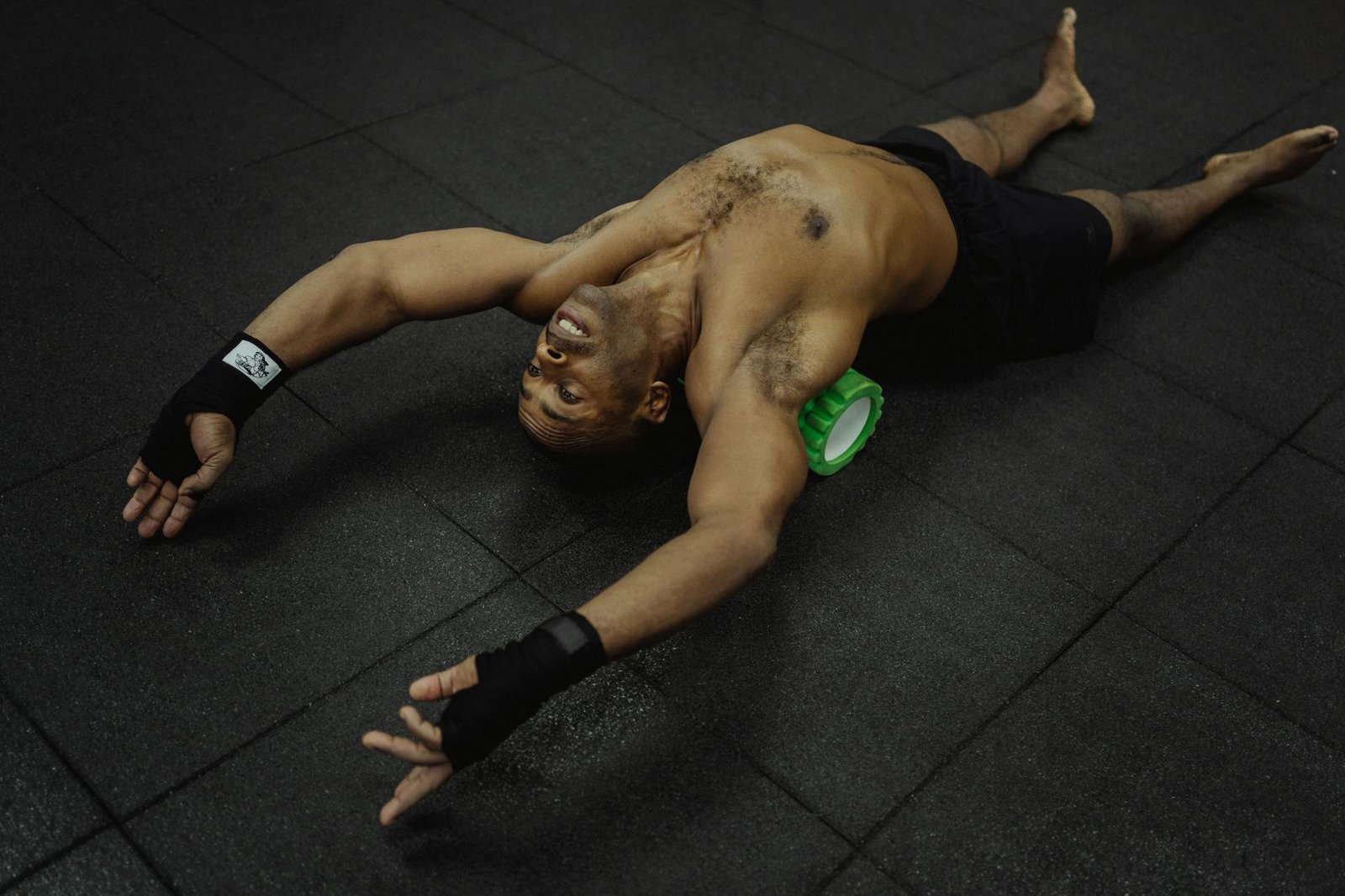
- Textured/grid rollers: Feature raised patterns that mimic a therapist’s fingers for deeper tissue work. The TriggerPoint GRID Foam Roller is a cult favourite among dancers and athletes alike — it’s durable, portable, and delivers targeted relief.
- Vibrating rollers: A step up in intensity, the Hyperice Vyper 3 combines vibration with rolling to accelerate recovery faster. Great for intermediate dancers dealing with chronic tightness.
As a general rule, start with a medium-density smooth roller. You can always progress to a more intense option as your body adapts.
The 5 Best Foam Roller Exercises for Dancer Muscle Recovery
These moves target the muscle groups dancers rely on most — hips, calves, IT band, spine, and feet. Aim to hold each rolling position for 30 to 60 seconds, moving slowly and pausing on tender spots.
1. Hip Flexor and Quad Roll
Dancers chronically overtighten their hip flexors and quads from repeated turnout, kicks, and jumps. This roll targets both areas in one smooth movement.
- Lie face down with the roller positioned just below one hip bone.
- Support your upper body on your forearms and keep your core engaged.
- Slowly roll down toward your knee, covering the full length of the quad.
- When you find a tender spot, pause and breathe deeply for 5–10 seconds.
- Switch sides and repeat.
Dancer tip: Keep your foot flexed on the leg you’re rolling to increase the stretch through the shin and ankle at the same time.
2. IT Band and Outer Hip Release
The iliotibial (IT) band runs along the outside of the thigh and is notoriously tight in dancers who practice high kicks, battements, or hip-hop styles. This is one of the most important — and yes, sometimes uncomfortable — foam roller exercises for dancer recovery.
- Lie on your side with the roller placed just below your hip.
- Stack your legs or place your top foot flat on the floor for stability.
- Using your arms, slowly roll from your hip down to just above your knee.
- Take it slow — this area can be very sensitive.
If this feels too intense, try the RumbleRoller Beastie Ball, a smaller massage ball that lets you control pressure more precisely on the outer hip.
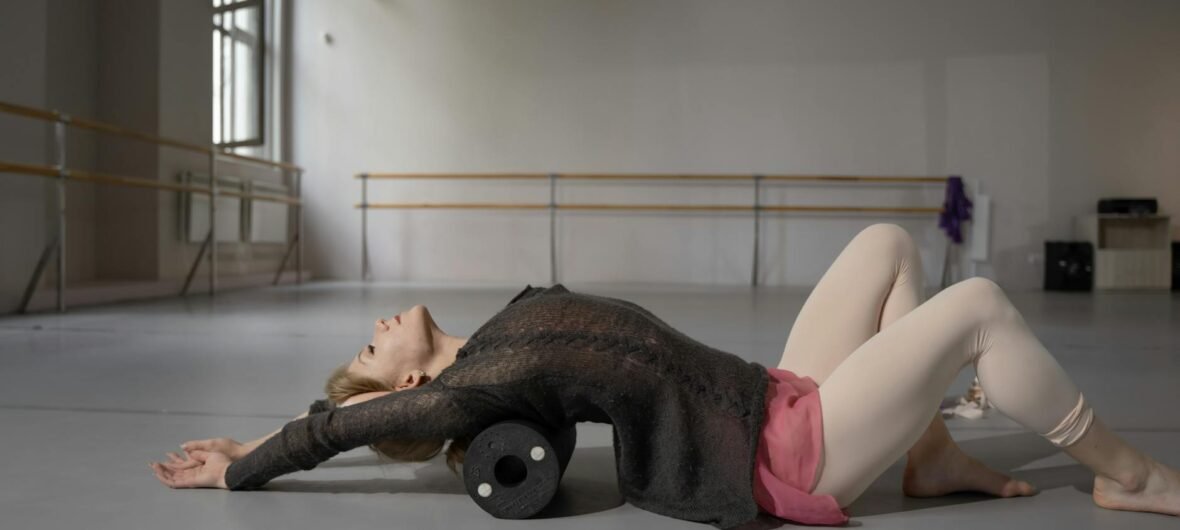
3. Thoracic Spine Mobilization
Upper back stiffness limits arm port de bras, backbends, and partner work. This gentle rolling exercise improves spinal mobility and posture — critical for every dance style.
- Place the roller horizontally across your mid-back, just below your shoulder blades.
- Support your head with your hands, elbows pointing up.
- Slowly lift your hips and roll from the mid-back up toward the base of the neck.
- Never roll directly on the lower back or neck.
- Pause at each vertebral level for a gentle extension stretch.
4. Calf and Achilles Release
Relevés, pointe work, and repeated jumping load the calves and Achilles tendon enormously. Neglecting this area is one of the most common reasons dancers develop chronic ankle pain.
- Sit on the floor with the roller placed under one calf, just above the ankle.
- Cross your opposite ankle over the top to add extra weight and pressure.
- Lift your hips slightly off the ground and roll from the ankle up to the back of the knee.
- Rotate your foot slightly inward and outward to target all sides of the calf muscle.
Follow this with a few slow ankle circles to keep the joint lubricated and mobile.
5. Plantar Fascia Foot Roll
For this one, swap your foam roller for a lacrosse ball or the TriggerPoint MB1 Massage Ball — it’s much more effective on the small muscles of the foot.
- Stand or sit and place the ball under the arch of one foot.
- Apply gentle downward pressure and slowly roll from the heel to the ball of the foot.
- Spend extra time on the arch and just behind the toes.
- Do this for 60–90 seconds per foot.
Dancers spend more time on their feet than almost any other athlete. Keeping the plantar fascia healthy prevents a cascade of problems up the kinetic chain — from foot pain all the way to hip and lower back issues.
When and How Often Should Dancers Foam Roll?
Timing matters. Here’s a simple framework to get the most out of your foam rolling routine:
- Before class or rehearsal: Use light, dynamic rolling for 5–8 minutes to warm up tissues and improve circulation. Keep pressure moderate and keep moving — don’t linger too long pre-performance.
- After class or rehearsal: This is your prime recovery window. Spend 10–15 minutes on the areas that worked hardest that day. Go slower, breathe deeper, and let the roller do its job.
- On rest days: A gentle full-body roll can help maintain tissue health without adding unnecessary stress to recovering muscles.
Most dancers benefit from foam rolling 4–6 times per week. Consistency is key — one session won’t undo weeks of tightness, but a daily habit will transform how your body feels over time.
Common Foam Rolling Mistakes Dancers Make
Even experienced dancers make these errors. Avoid them to get the full benefit from your recovery sessions:
- Rolling too fast: Speed defeats the purpose. Move slowly — about one inch per second — to allow the nervous system to release tension.
- Skipping the painful spots: Those tender knots are exactly where you need to spend more time. Pause, breathe, and wait for the sensation to reduce by about 50% before moving on.
- Rolling directly on joints: Avoid rolling directly on the knee joint, lower spine, or neck. Stick to the muscle belly.
- Forgetting to hydrate: Fascia is largely water. Drink plenty of water before and after rolling to help tissues flush out metabolic waste.
- Treating it as a warm-up substitute: Foam rolling prepares tissue but doesn’t replace a proper dynamic warm-up before dancing.
Building Your Post-Rehearsal Recovery Ritual
The best results come when foam rolling is part of a broader recovery strategy. Try pairing your rolling sessions with these complementary habits:
- Gentle static stretching after rolling while muscles are warm and pliable
- Contrast showering (alternating hot and cold water) to reduce inflammation
- Magnesium-rich foods or a magnesium supplement to support muscle relaxation
- Adequate sleep — the single most powerful recovery tool available to any dancer
Think of foam rolling as one pillar in a recovery temple. The more pillars you build, the more resilient and consistent your dancing becomes.
Start Rolling Your Way to Better Performance
Your body is your instrument, and like any instrument, it performs best when it’s well-maintained. Incorporating the best foam roller exercises for dancer muscle recovery into your weekly routine is one of the most practical, low-cost investments you can make in your dance career — at any level.
Start with a quality roller like the TriggerPoint GRID or the Amazon Basics Foam Roller, pick two or three exercises from this guide, and commit to rolling consistently after every major training session. Within two to three weeks, you’ll likely notice reduced soreness, improved flexibility, and a body that feels more ready to move.
Ready to get started? Pick one exercise from this list and try it tonight after your next class. Your future self — the one who’s still dancing strong years from now — will thank you. Drop a comment below and let us know which foam roller exercise made the biggest difference for your body!